Home › Volumes › Bird Neighbours › Thrashers, Wrens, Etc.
Catbird
Also called: BLACK-CAPPED THRUSH
- Length
- 9 inches. An inch shorter than the robin.
- Male and Female
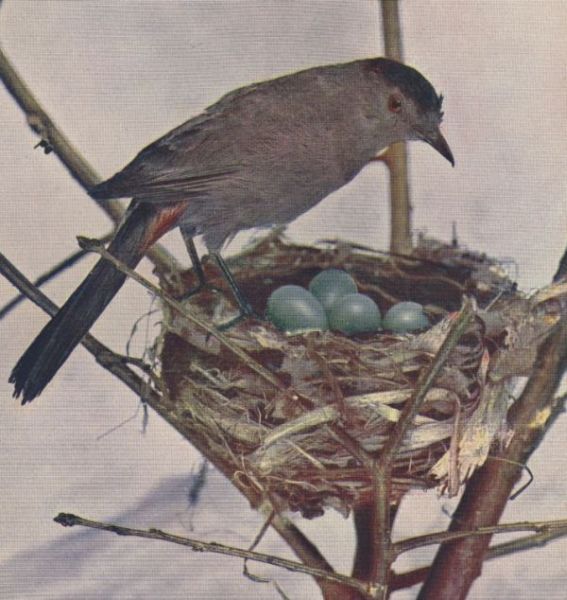
- Dark slate above; below somewhat paler; top of head black. Distinct chestnut patch under the tail, which is black; feet and bill black also. Wings short, more than two inches shorter than the tail.
- Range
- British provinces to Mexico; west to Rocky Mountains, rarely to Pacific coast. Winters in Southern States, Central America, and Cuba.
- Migrations
- May. November. Common summer resident.
Our familiar catbird, of all the feathered tribe, presents the most contrary characteristics, and is therefore held in varied estimation--loved, admired, ridiculed, abused. He is the veriest "Dr. Jekyll and Mr. Hyde" of birds. Exquisitely proportioned, with finely poised black head and satin-gray coat, which he bathes most carefully and prunes and prinks by the hour, he appears from his toilet a Beau Brummell, an aristocratic--looking, even dandified neighbor. Suddenly, as if shot, he drops head and tail and assumes the most hang-dog air, without the least sign of self-respect; then crouches and lengthens into a roll, head forward and tail straightened, till he looks like a little, short gray snake, lank and limp. Anon, with a jerk and a sprint, every muscle tense, tail erect, eyes snapping, he darts into the air intent upon some well-planned mischief. It is impossible to describe his various attitudes or moods. In song and call he presents the same opposite characteristics. How such a bird, exquisite in style, can demean himself to utter such harsh, altogether hateful catcalls and squawks as have given the bird his common name, is a wonder when in the next moment his throat swells and beginning pbut-pbut-coquillicot, he gives forth a long glorious song, only second to that of the wood thrush in melody. He is a jester, a caricaturist, a mocking-bird.
The catbird's nest is like a veritable scrap-basket, loosely woven of coarse twigs, bits of newspaper, scraps, and rags, till this rough exterior is softly lined and made fit to receive the four to six pretty dark green-blue eggs to be laid therein.
As a fruit thief harsh epithets are showered upon the friendly, confiding little creature at our doors; but surely his depredations may be pardoned, for he is industrious at all times and unusually adroit in catching insects, especially in the moth stage.