Home › The Classification of Butterflies › The Skippers (BB With some of the branches)
The Skippers (BB With some of the branches)
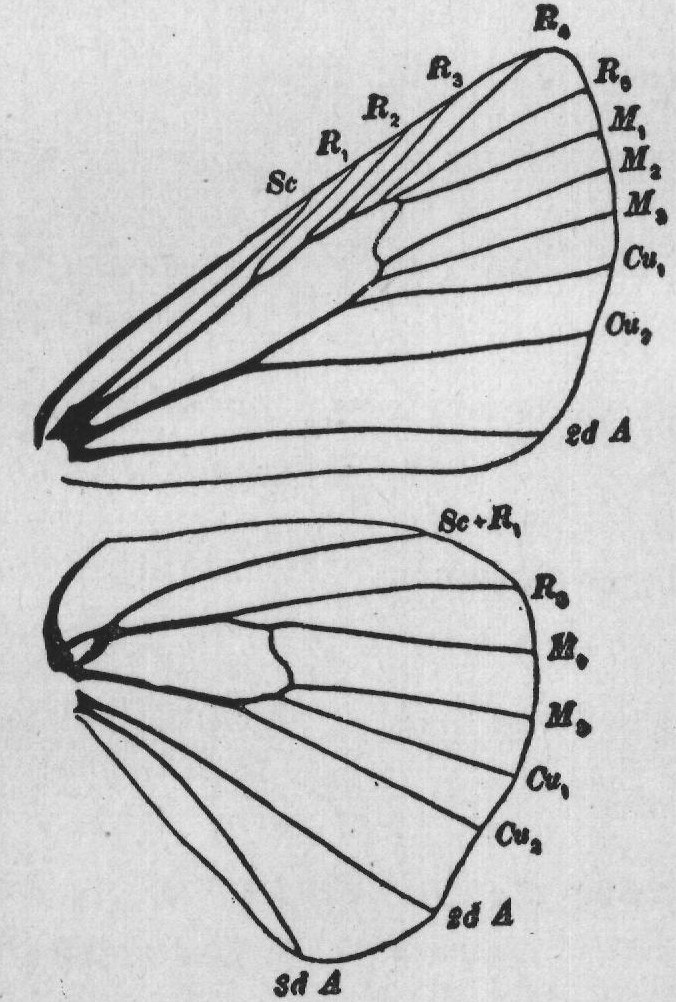
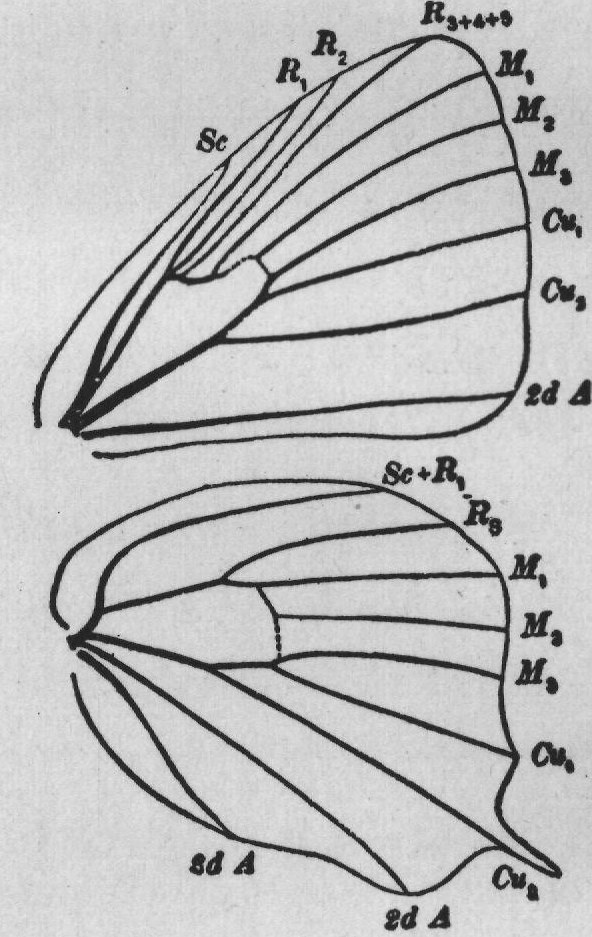
BB. With some of the branches of the radius of the fore wings coalesced beyond the apex of cell R + M;2 the 1 The following is the method of using the analytical tables given in this book: Read carefully the statement of characteristics given opposite A and AA respectively, and by examining the insect to be classified determine which is true of this insect. This will indicate in which division of the table the name of the group to which the insect belongs is to be looked for. If this division of the table is subdivided, pass to B and BB in this division and determine in a like manner under which the insect belongs. Continue in this way, passing to the letters C, D, E, etc., in regular order till the name of the group is reached. Then turn to the page indicated and read the description of the group given there, comparing the specimens with the description. 2 In some butterflies two or more branches of radius of the fore wings coalesce to the margin of the wing (Fig. 23); in this case all of the branches may appear to arise from cell R + M, as with the skippers, but the fact of such coalescence is shown by the number of the branches of radius being less than five. See page 38, Fig. 23. club of the antennæ not terminated by a recurved hook. (Superfamily Papilionoidea), p. 35.