Home › Contents › Glencoe Kinn
Glencoe Kinn
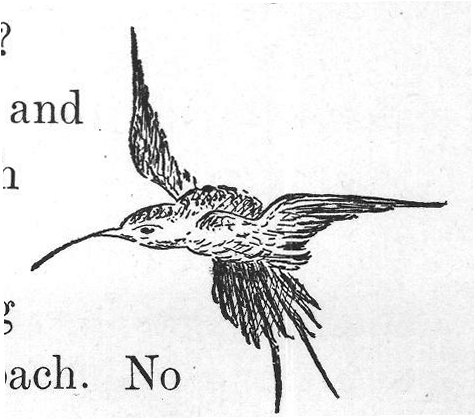
reach the nectar. The humming bird must touch the anthers when he thrusts in his bill.
Whatever takes the honey must touch the anthers.
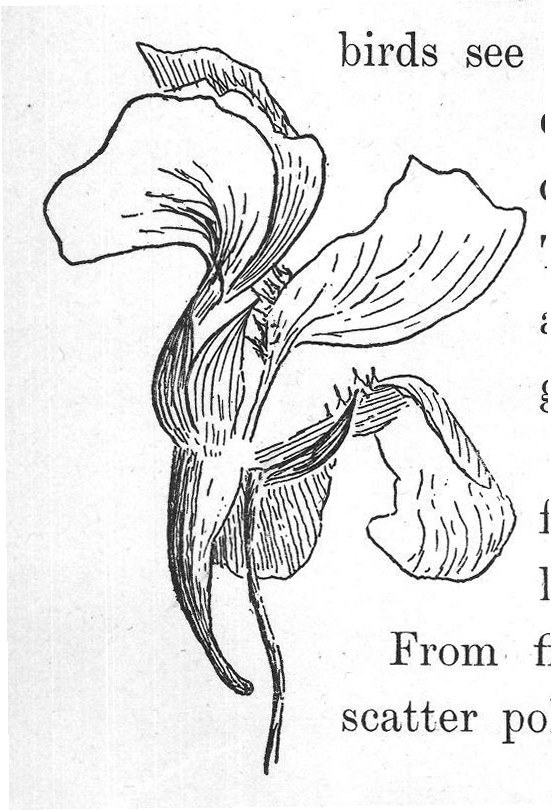
This is why Tropæolum has a long red horn full of rich nectar. She wishes the birds and insects that come to her for honey to touch her anthers, which are overflowing with red pollen.
She has made the pollen for her friends, and not for her own use. She wishes her neighbors, the other tropæolums, to have the beautiful gift; but how can she send it to them?
She makes herself beautiful and bright; she fills her horn with honey and exhales fragrance.
The bees and the humming birds see her and approach. No doubt they rejoice in the bright colors, the perfume, and the nectar.
They come on bright wings, and as they approach the nectary the grains of red pollen cling to them.
They cannot get enough nectar from one flower; each gives them a little, then they fly to others for more.
From flower to flower they hasten and scatter pollen as they go. The pollen from