Home › Sea-Scorpions › Sea-Scorpions: Pterygotus
Sea-Scorpions: Pterygotus
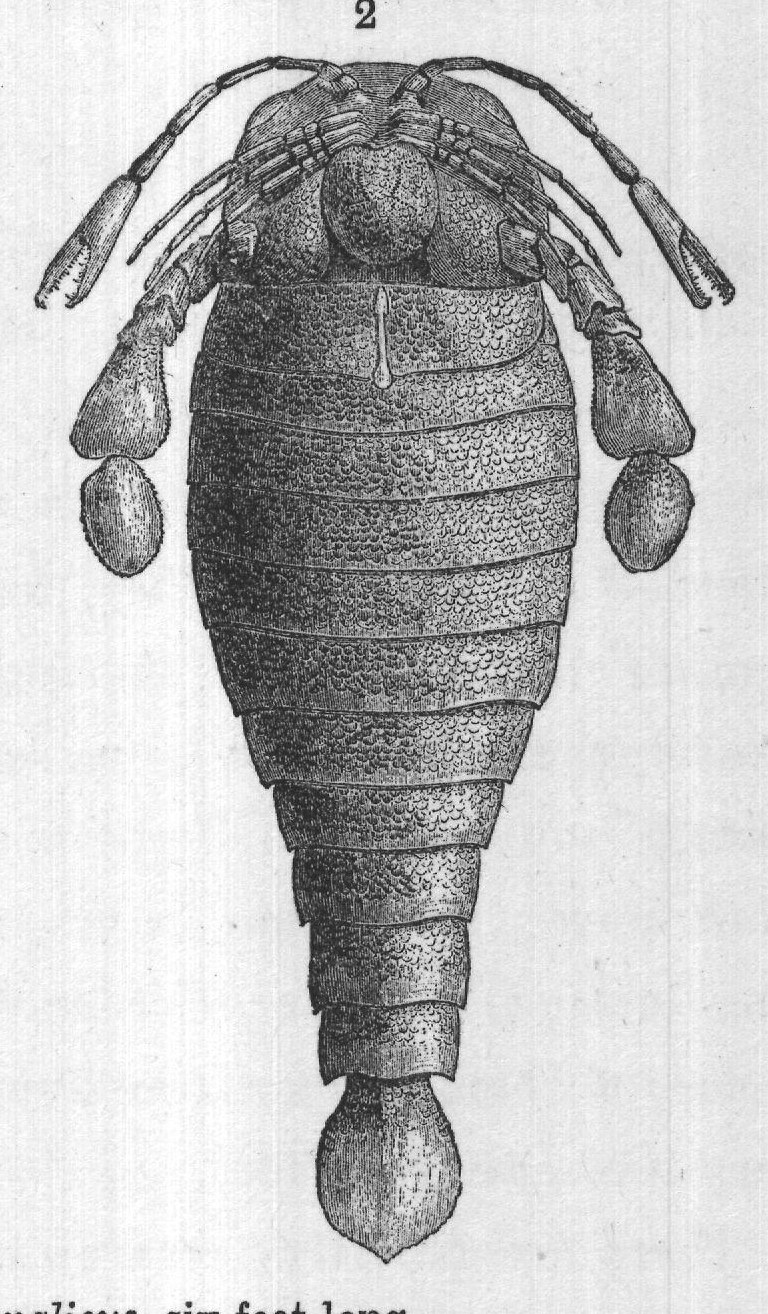
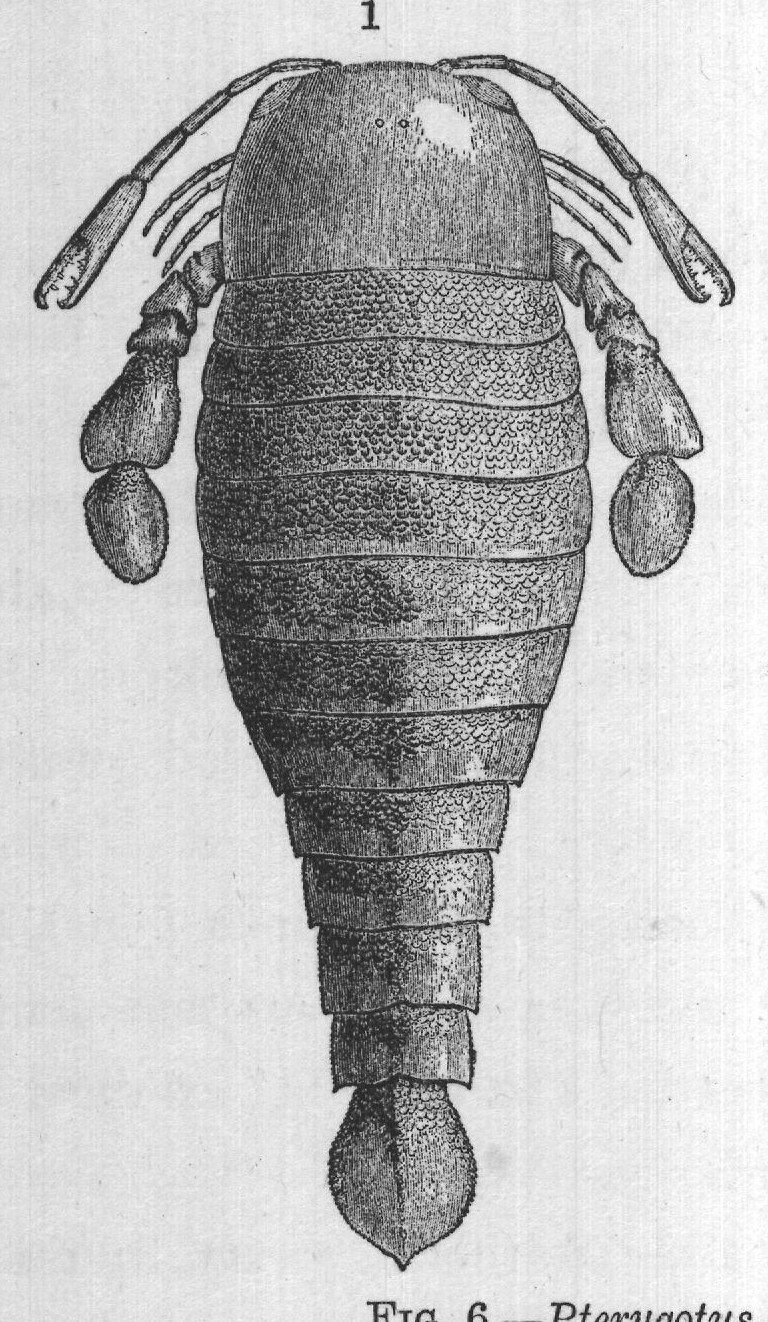
C that they are related to scorpions, and for this reason we call them Sea-scorpions. (See Plate II.) The Crustacea are a very ancient race, as well as a flourishing one; some very old rocks containing undoubted fossils-namely, certain slates found in Wales and the Lake District-tell us of a 1 2 FIG. 6. Pterygotus anglicus, six feet long. 1. Upper side. 2. Under side. (After H. Woodward.) time when shallow seas swarmed with little articulate animals known as trilobites.
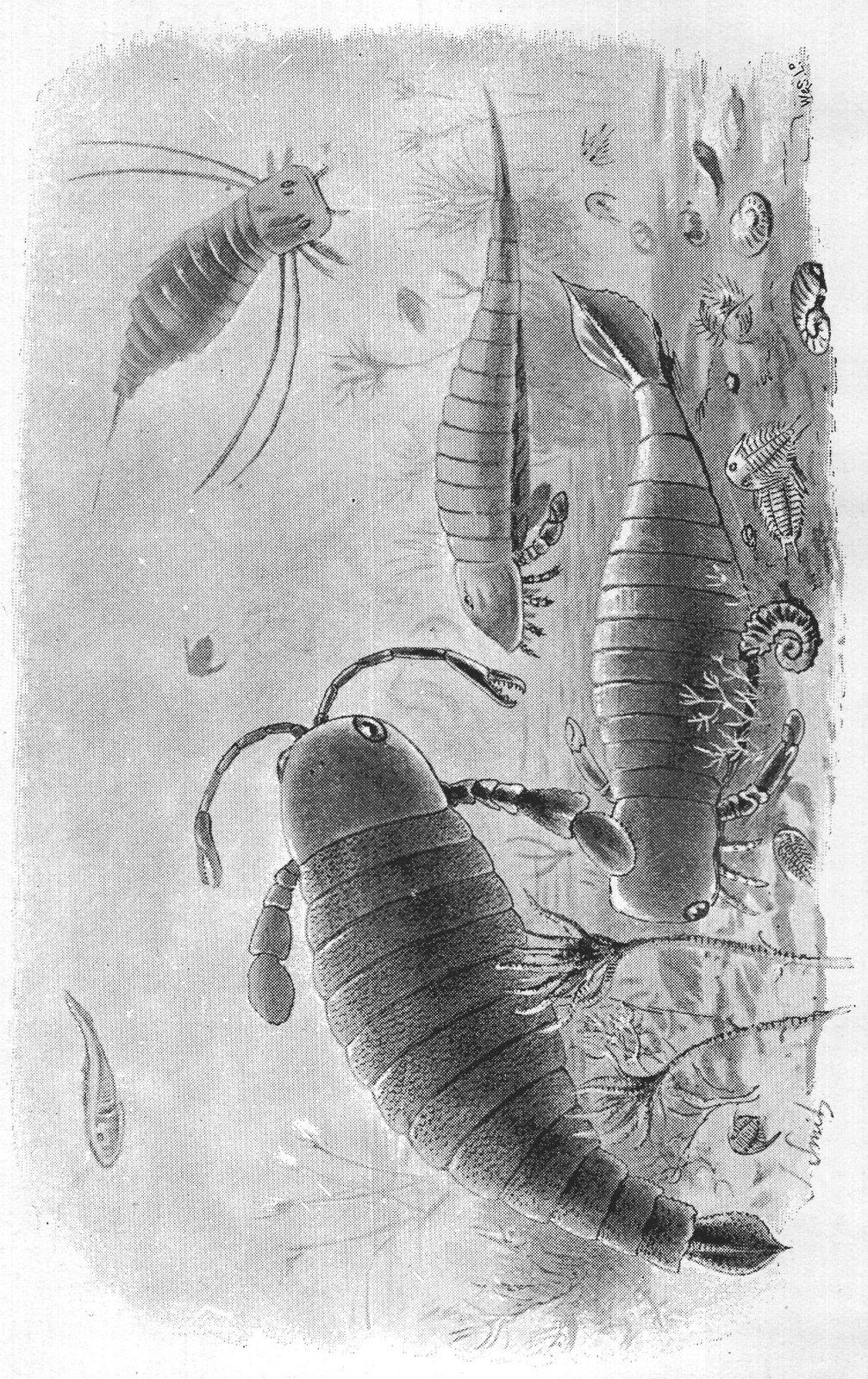
The best-known and largest of the Sea-scorpions is represented in Fig. 6. It has received the name Pterygotus (or wing-eared), from certain fanciful resemblances pointed out by the quarrymen. It was first discovered, along with others of its kind, by Hugh Miller, at Carmylie in Forfarshire, in a certain part of the Old Red Sandstone (see Table of Strata, Appendix I.) known as the Arbroath paving-stone. The quarrymen, in the course of their work, came upon and dug out large pieces of the fossilised remains of this creature. Its hard coat of jointed armour bore on its surface curious wavy markings that suggested to their minds the sculptured feathers on the wings of cherubs of all subjects of the chisel the most common. Hence they christened these remains "Seraphim." They did not succeed in getting complete specimens that could be pieced together; and the part to which this fanciful name was given turned out to be part of the under side below the mouth. It was composed of several large plates, two of which are not unlike the wings of a cherub in shape. Hugh Miller says in his classic work, The Old Red Sandstone-"the form altogether, from its wing-like appearance, its feathery markings, and its angular points, will suggest to the reader the origin of the name given it by Forfarshire workmen." A correct restoration, in proportion to the fragments found in the Lower Old Red Sandstone, would give a creature measuring nearly six feet in length, and more than a foot across. Pterygotus anglicus may therefore be justly considered a monster crustacean. The illustrious Cuvier, who, in the eighteenth century, founded the science of comparative anatomy (see p. 5), astonished the scientific world by his bold interpretations of fossil bones. From a few of the chief bones he could restore the skeleton of an entire animal, and determine its habits and mode of living. When other wise men were unable to read the writing of Nature on the walls of her museum-in the shape of fossil bones-he came forward, like a second Daniel, to interpret the signs, and so instructed us how to restore the world's lost creations. Hugh Miller submitted the fragments found at Balruddery to the celebrated naturalist Agassiz, a pupil of Cuvier, who had written a Smit Pterygotus anglicus.
Length 6 feet.
Eurypterus.
Stylonurus.