Home › Extinct Whales and Wombats › Extinct Whales and Wombats: Sandstone
Extinct Whales and Wombats: Sandstone
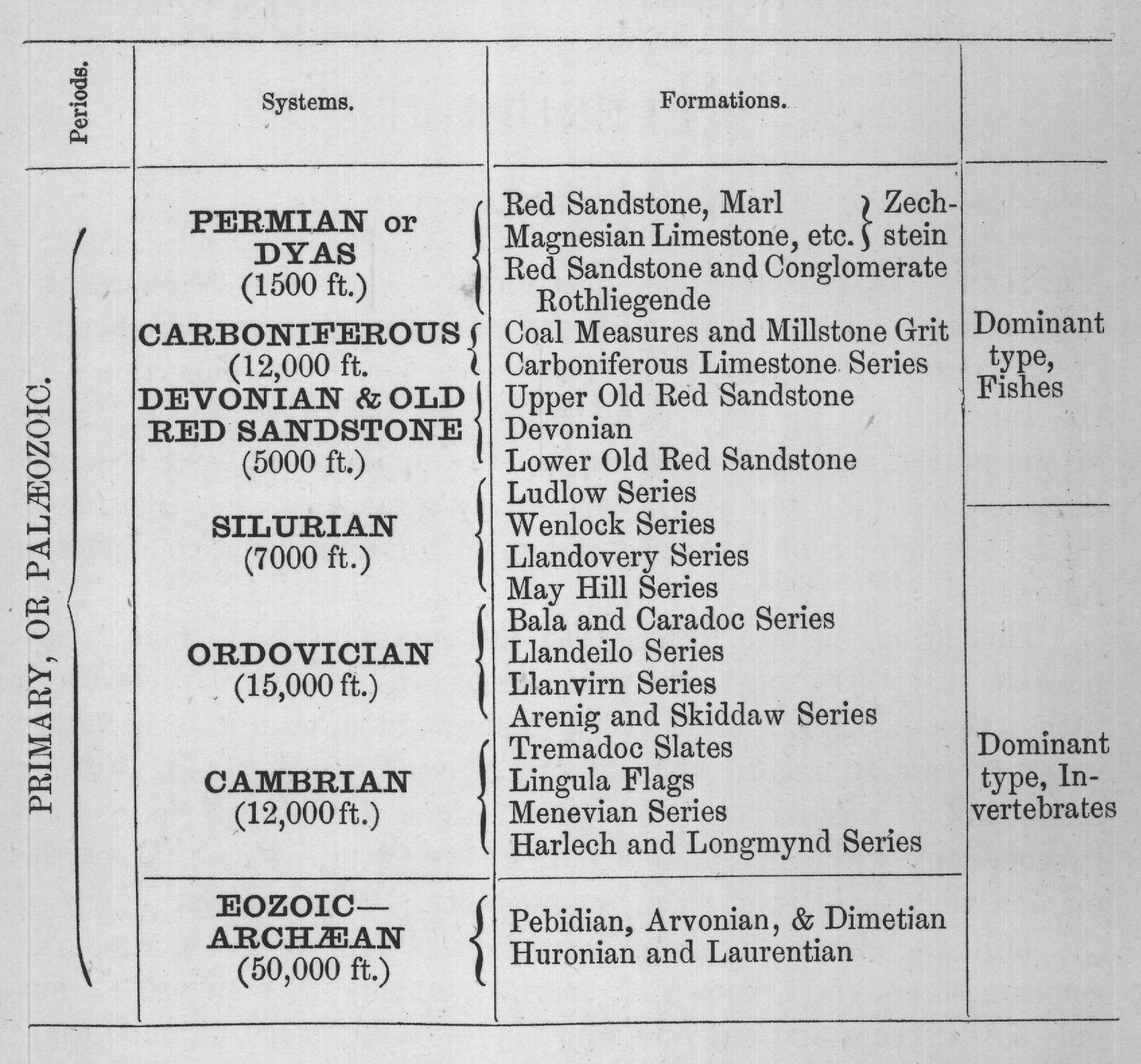
DEVONIAN & OLD RED SANDSTONE (5000 ft.) SILURIAN (7000 ft.) ORDOVICIAN (15,000 ft.) CAMBRIAN (12,000 ft.) EOZOIC- ARCHEAN (50,000 ft.) Red Sandstone, Marl Zech- Magnesian Limestone, etc. (stein Red Sandstone and Conglomerate Rothliegende (Coal Measures and Millstone Grit Dominant Carboniferous Limestone Series Upper Old Red Sandstone Devonian Lower Old Red Sandstone Ludlow Series Wenlock Series Llandovery Series May Hill Series Bala and Caradoc Series Llandeilo Series Llanvirn Series Arenig and Skiddaw Series Tremadoc Slates Lingula Flags Menevian Series Harlech and Longmynd Series Pebidian, Arvonian, & Dimetian Huronian and Laurentian type, Fishes Dominant type, Invertebrates The total is 117,500 feet. Estimates in years of geological time, often given in Newspapers, are quite misleading. No geologist can say how many years ago the Eocene, or any other period, began. We only know that over 100,000 feet of rocks have been deposited; and, by taking a rough average (1 foot in 1000 years), we get as the result of multiplying 100 million years. But this is only a very rough estimate. The world may be much older than that, it can hardly be less since geological time began.