Home › Favorite Songsters › Favorite Songsters: Robins
Favorite Songsters: Robins
Robins are migratory birds, but they migrate only just so far as is absolutely necessary in order to get food to live upon. Many of them pass the winter even in the north- Many nests are built in such locations.
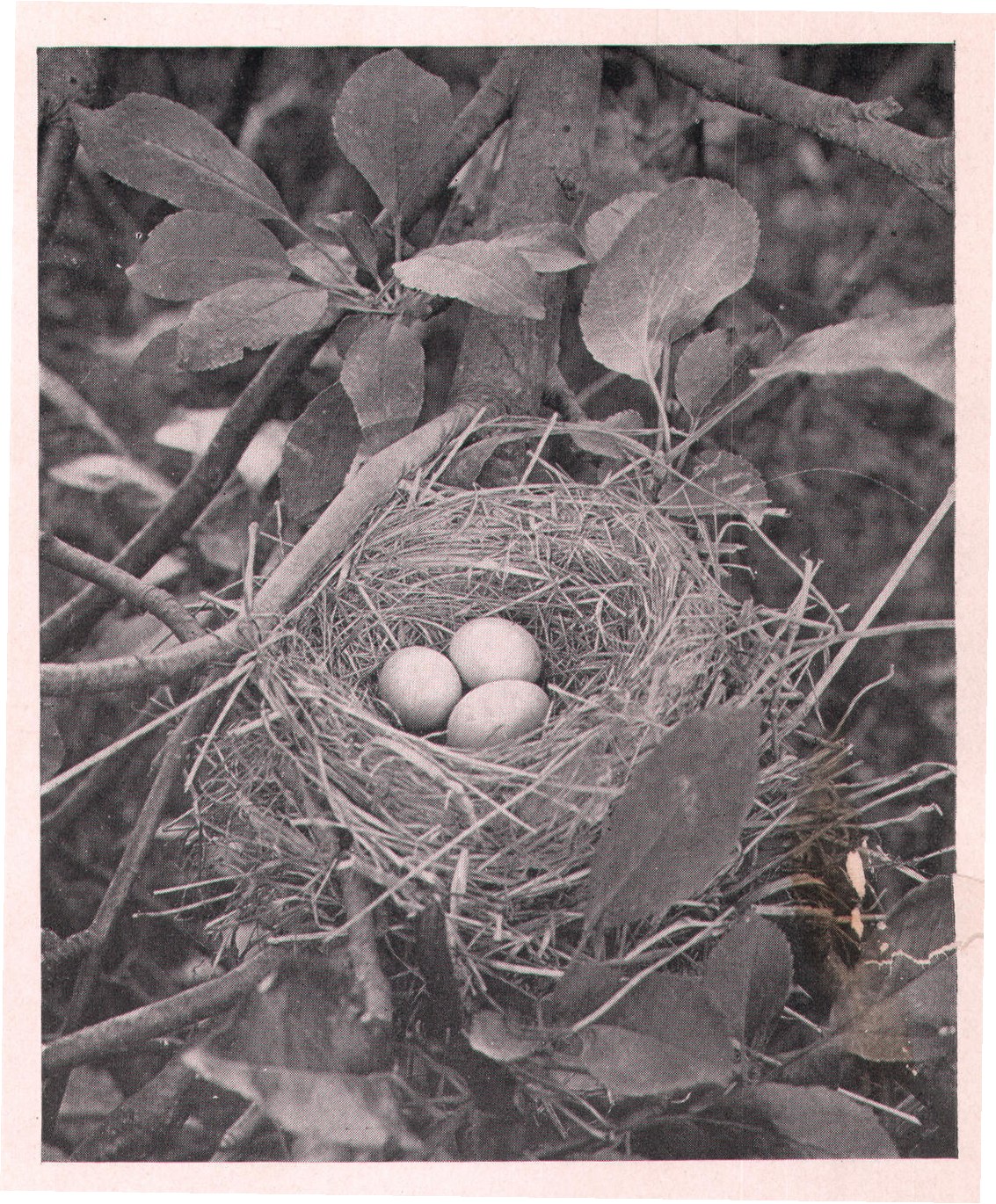
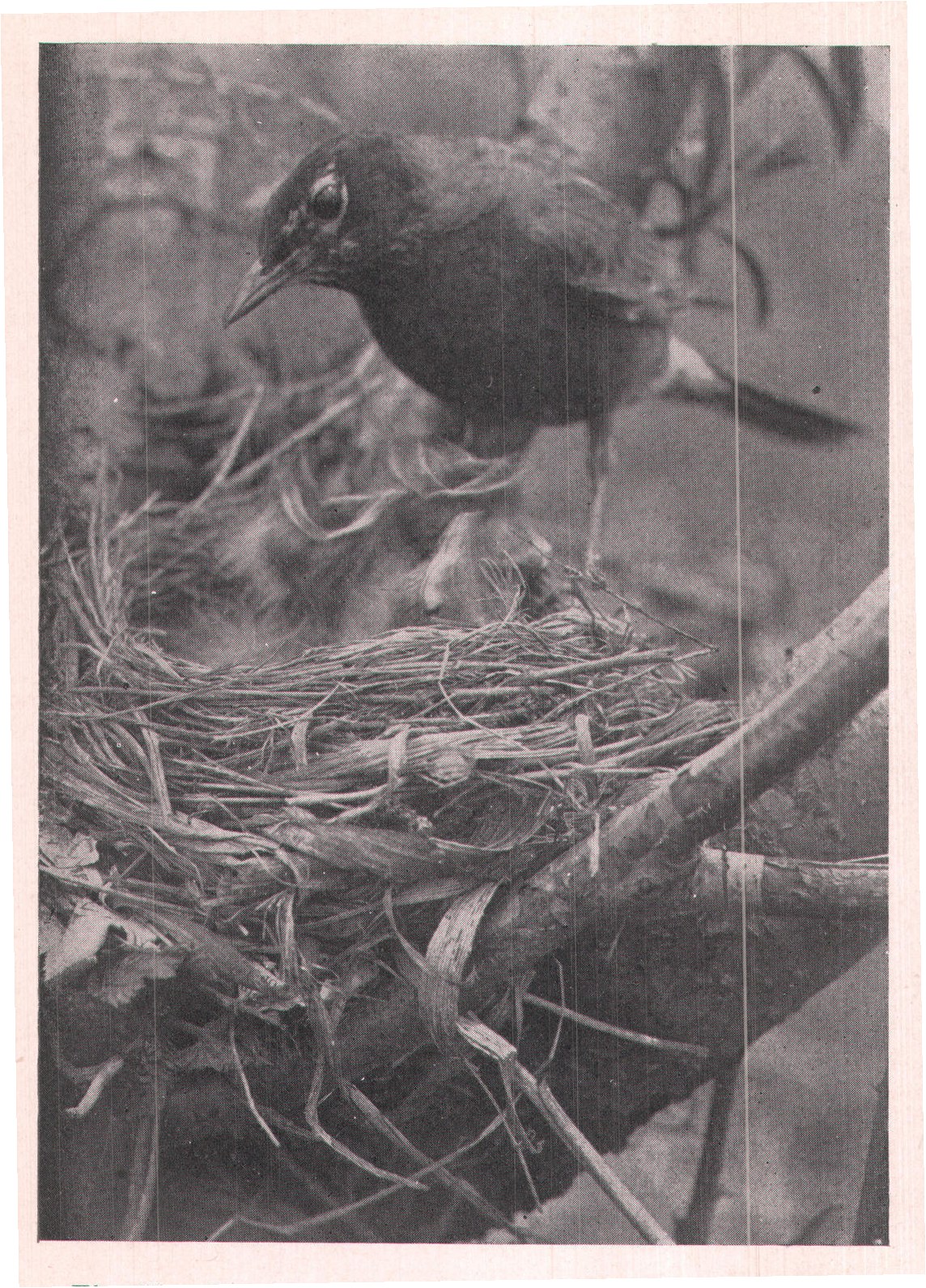
A typical nest, the inside construction of which is almost wholly of mud. ern states, where they can get shelter in large cedar swamps. It is quite probable that it is the birds from the extreme northern parts of their breeding range that winter in northern United States, while the birds that breed here migrate southwards to the Gulf States.
Adult Robins return to the same breeding grounds each year and are believed to remain mated for life. It is probable that the young birds become separated from their parents and from each other and seek new fields on their re-- turn from the south.
The song of the Robin is always pleasing, a loud, rolling "cheer-up, cheerily cheerily, etc." varied greatly in pitch but usually fitting these words. An old rendition of the English Sparrows pulled the bottom from this nest and the eggs fell to the ground.
Robin song, probably originating in the mind of some physician, runs "Kill-him, cure-him; kill-him, cure-him; give him physic; quick!" Robins have, however, other notes not so pleasing. Their voices are loud and their lungs lusty. When they have a real or fancied grievance they can create more excitement and make more noise than a dozen of any other species of bird. I can speak with authority in regard to the volume of noise Robins are capable of making, for they consider placing a camera up in a tree within three feet of their home, a real grievance and they call out ali other birds in the neighborhood to help them proclaim the fact.
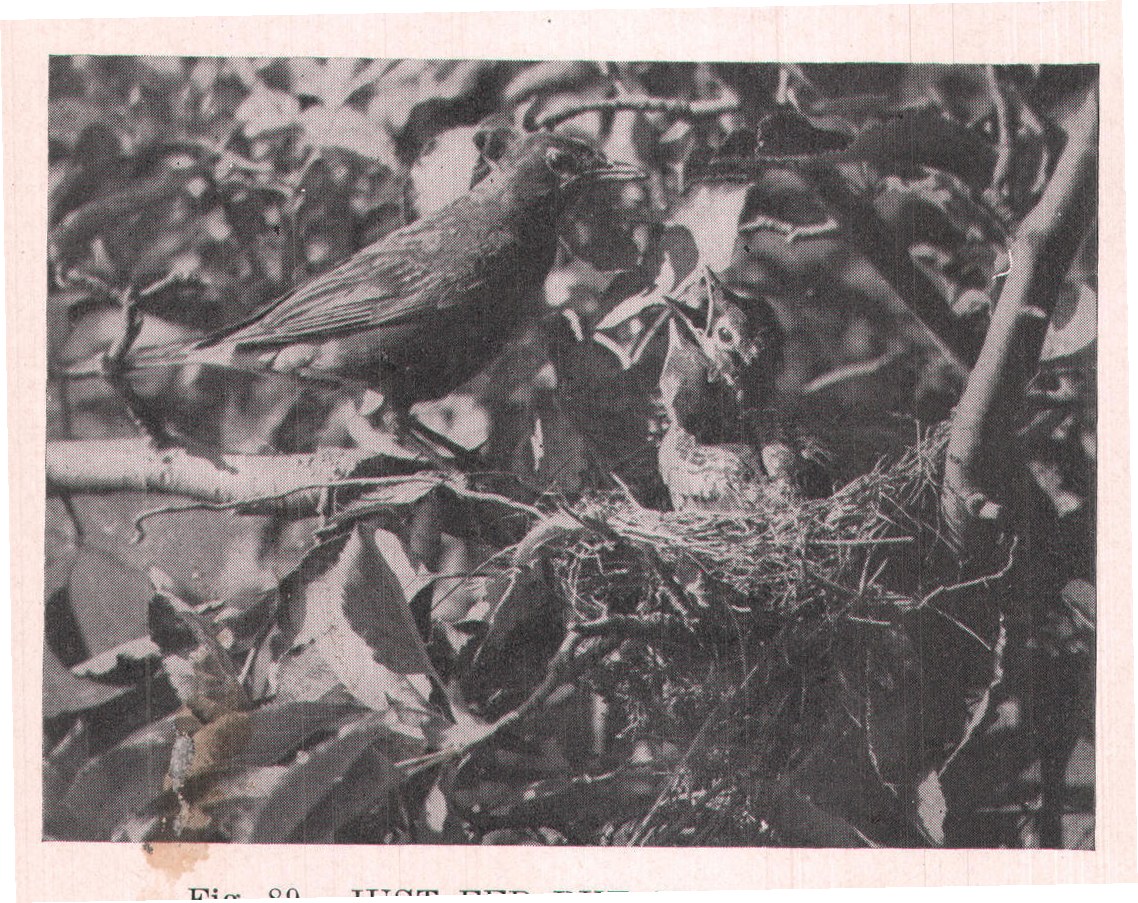
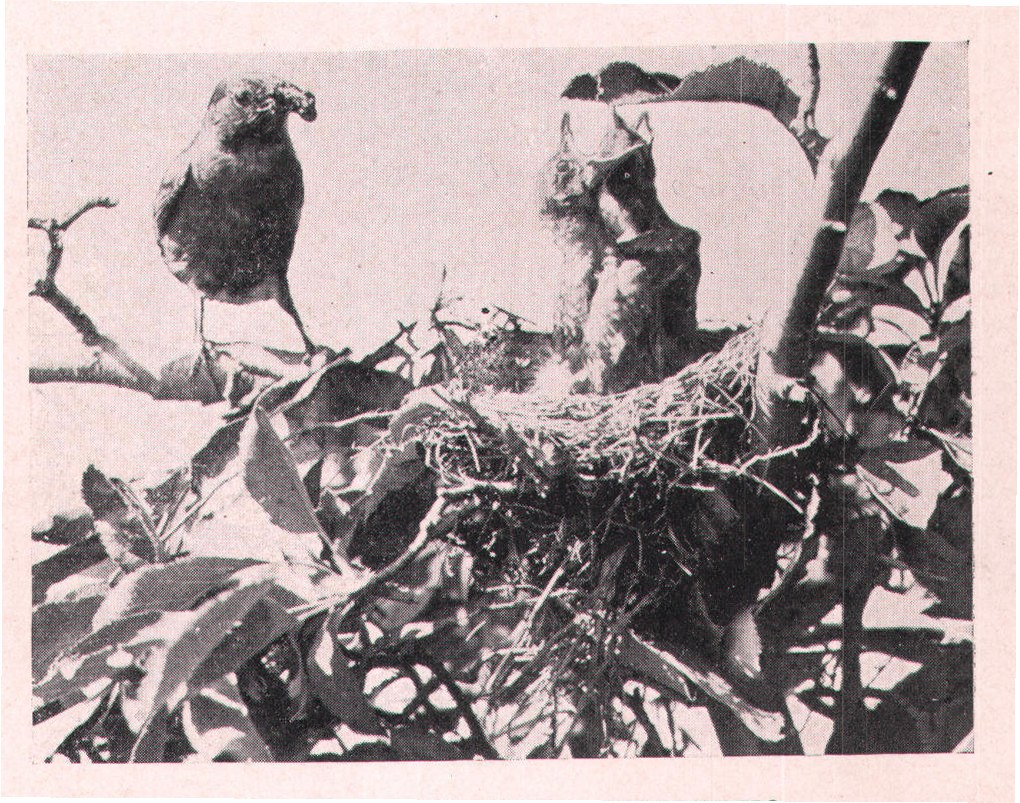
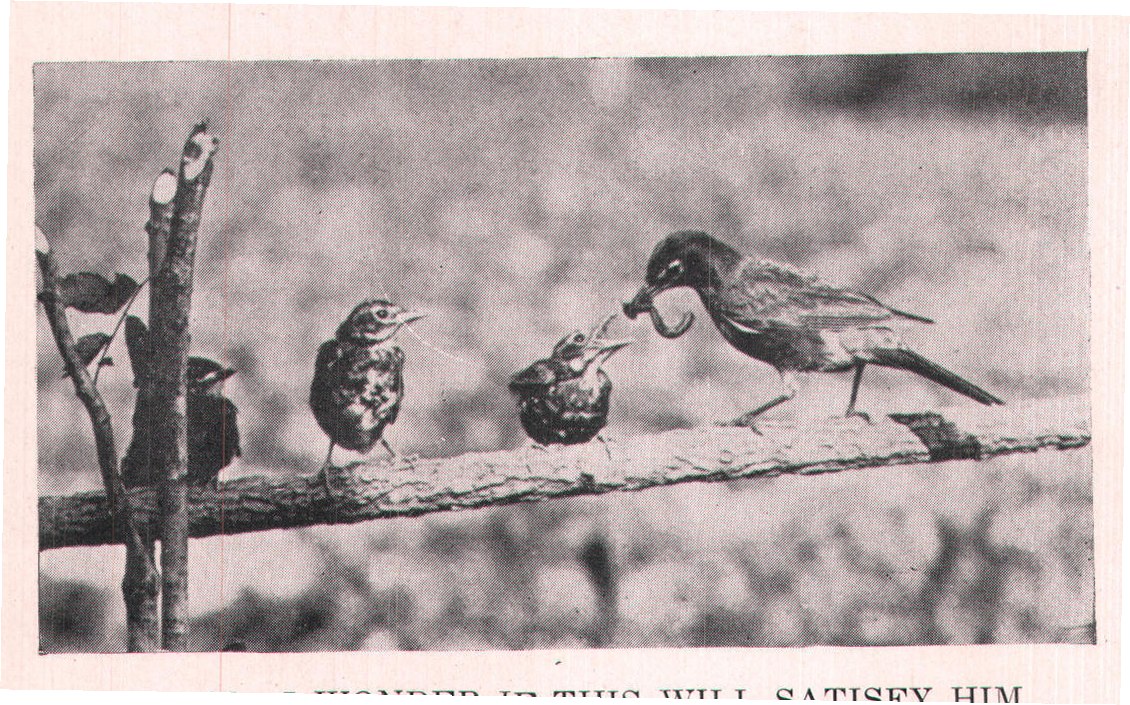
I well remember the first Robin nest I ever "tackled" photographically, although it was a good many years ago. It was on an apple bough perhaps ten feet above ground. Tents were not used at that time, but the camera shutter was operated from a distant hiding place, by means of a very long tube and a very large bulb. This particular pair of Robins never did like me, for I had, on several occasions, visited nests in adjoining trees, so you can imagine the greeting that I received when I climbed into their own tree, pulled up the camera and set it with the great staring eye within three feet of their nest. I spent more time and energy and had more trouble securing pictures of these particular Robins than I have ever experienced with any other kind of birds. Curiously enough they did not care so much about the camera which was so close to their home as they did about me, hiding behind a tree a hundred feet away. To make a long story short, I had to cover the camera with my focussing cloth and leave it in that tree over night, returning the next morning with sufficient thread to operate Fig. 93. Taken in 1-100 of a second, showing the active movements of hungry young birds. the camera shutter from a distance of three hundred feet. I got the pictures but it was an unusual amount of trouble to do so, especially for such common birds as Robins. The different temperaments of different birds of the same species is emphasized by the fact that I have since taken Robin pictures with no concealment, from a distance of less than six feet.
Most normal Robins place their rudely constructed mudand-grass houses in trees at heights of from six to twenty feet from the ground. Of course there are eccentric Robins, as well as persons, and some of these depart from the usual customs of their kind. We sometimes see their nests in the upper branches of elms, fully sixty feet up; I have also found them built among roots under overhanging banks. Fig. 95. Approaching the nest shown in figure 94.
These represent the extremes of altitude. We have many instances of very odd locations a few of which I will mention. Some people consider quantity rather than quality as the most important ingredient of music. Such must have been the opinions of the Robins that built their nest on a girder in a factory where the noise was continuous and deafening. They obtained entrance through a broken window pane opposite the girder. It is very strange that they should have had the temerity to even enter such a place and stranger still that they should choose it for their home.
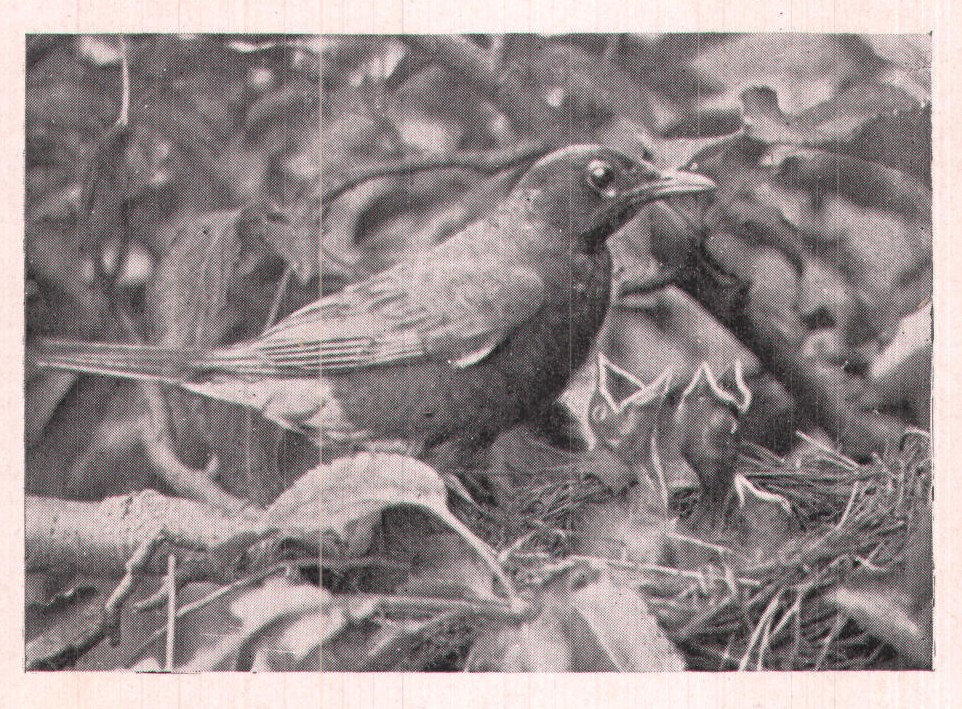
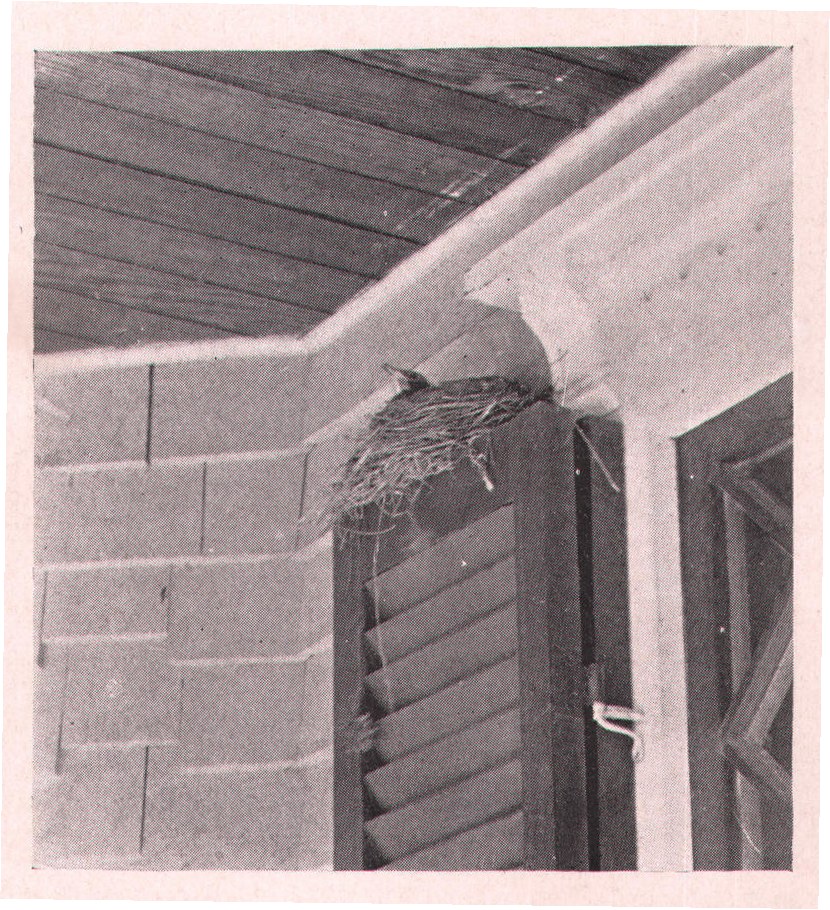
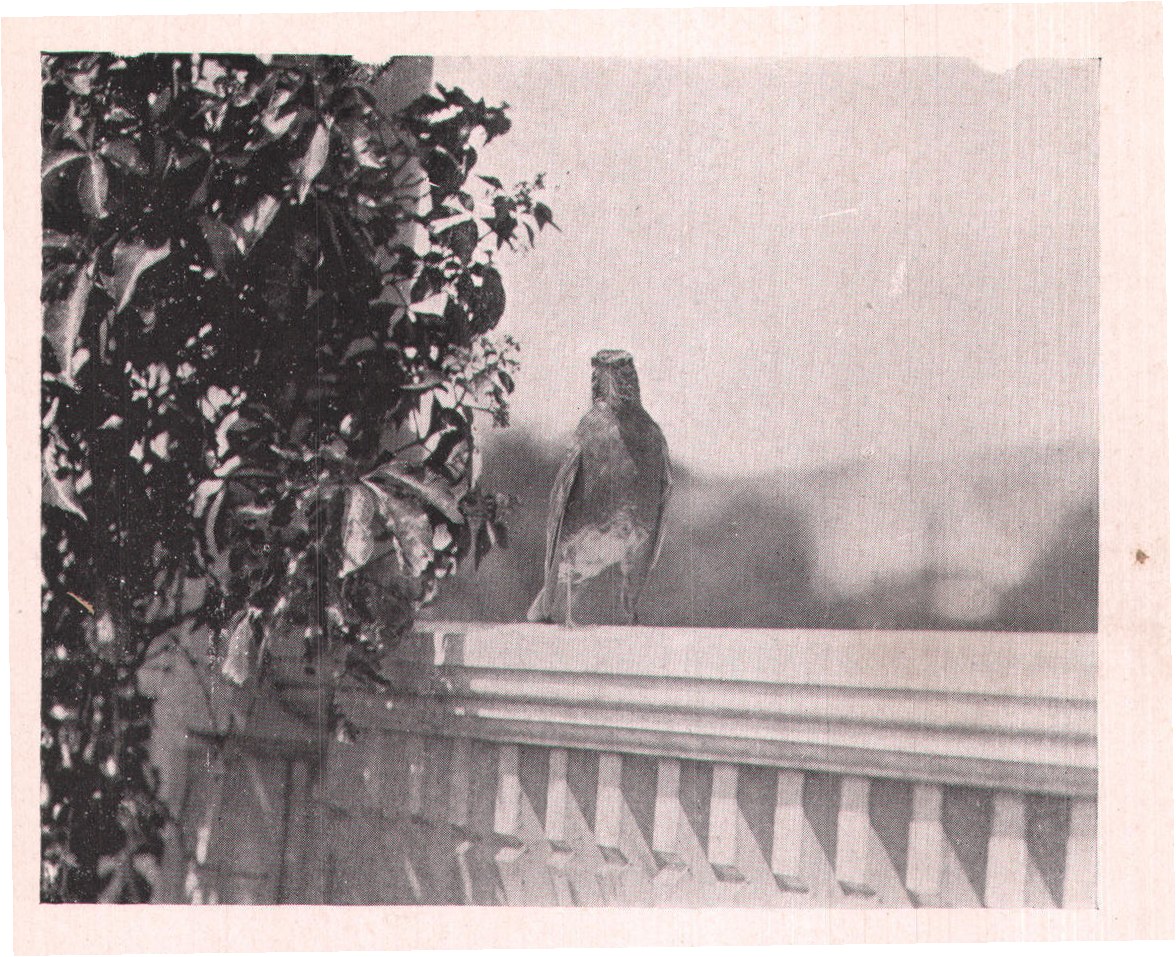
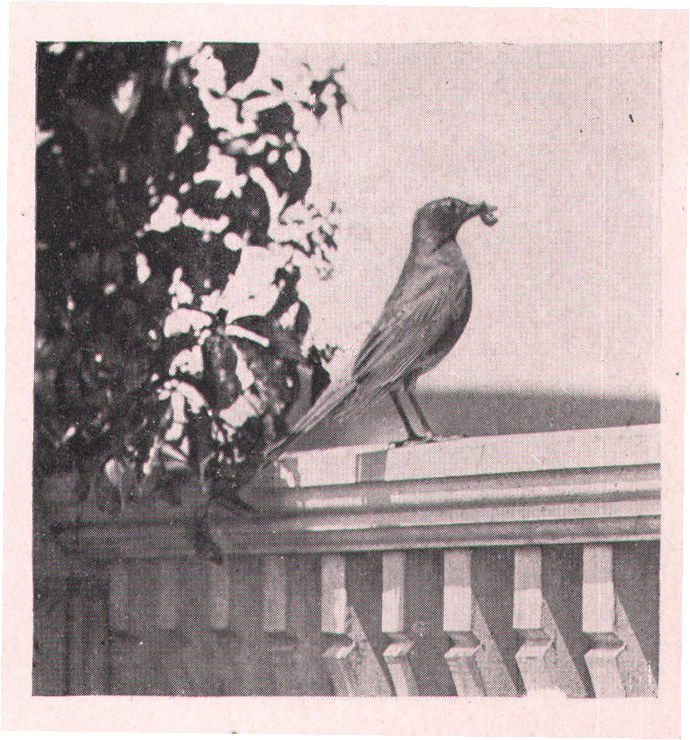
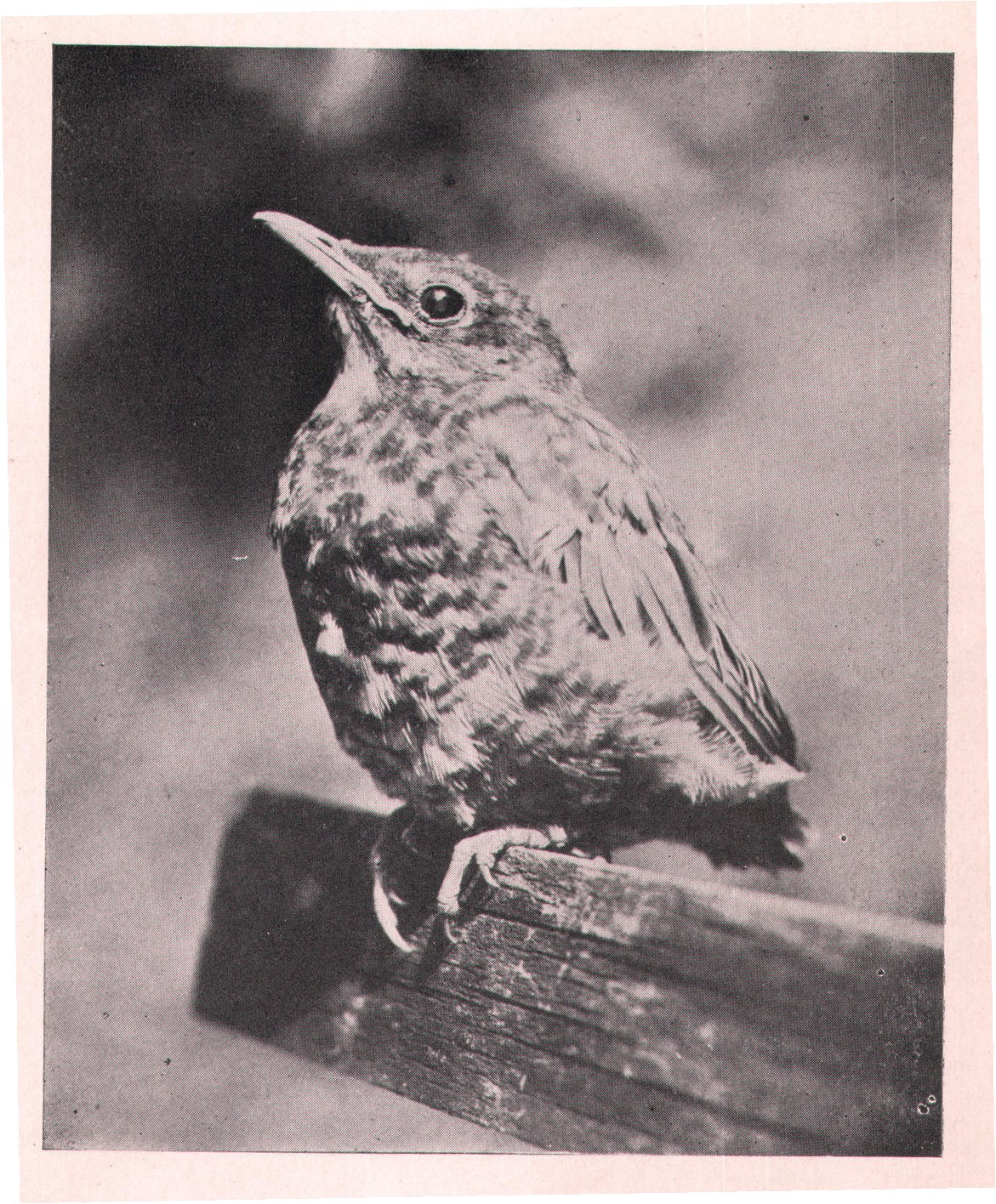
A suburban trolley line crosses a brook over a short bridge made by heavy iron stringers on which are wooden ties for the rails to rest upon. I think that if I were a bird and had determined to build a home in any such place, I should at least have placed it on one of the stringers between the ties where it would have had a secure foundation. Mrs. Robin, however, perhaps because she wanted more excite- Fig. 96. Sometimes worms were brought for the little ones and again mulberries from a nearby tree. ment and danger, plastered her nest right against the side of the rails, so that half rested on the lower flange and half on the tie. Cars ran on a half-hour schedule so that every fifteen minutes wheels rumbled over the rails within two inches of the rim of the nest. The strangest part of this nesting was that the nest remained in place and the young were successfully reared. While the Robin was incubating she always left the nest when cars passed over, at least during the daytime while I was watching; what she did at night can only be conjectured, but I presume from the actions of other birds under somewhat similar circumstances, that she stayed "aboard' the nest and let the cars go over her. Another pair of Robins liked city life. They chose a spot in the very heart of a large city, where there were large lawns from which they could easily extract the earth worms so palatable to Robins, young and old, and also near a large mulberry tree; with these two handy sources of food supply they felt that they had an ideal location. The only objection was the numbers of English Sparrows that are always present in cities. The ruffians and our native song and insectivorous birds, through no fault of the latter, can seldom live peaceably in the same neighborhood. I think that these Robins may have previously met with the same misfortune that befell the pair that I will next tell about, and decided that the best way to avoid further trouble from that source was to trust to the protection of mankind. At Showing the spotted breast common to the young of all memmarked ones. bers of the Thrush Family even though the adults have unof the Thrush Family even though the adults have unmarked ones. any rate, for three years in succession, they made their nest on the top of a blind on the front piazza of the property owner's house. As they were quite neat and did no damage they were allowed to remain and furnished a good deal of amusement for the family. The birds came and went without fear even while members of the family were gathered on the piazza directly under the nest. Sparrows were not allowed about the house any more than possible, but sometimes bands of them would mob one of the Robins as it was bringing food to its young; the bird could protect itself, but usually lost its provender during the melee.
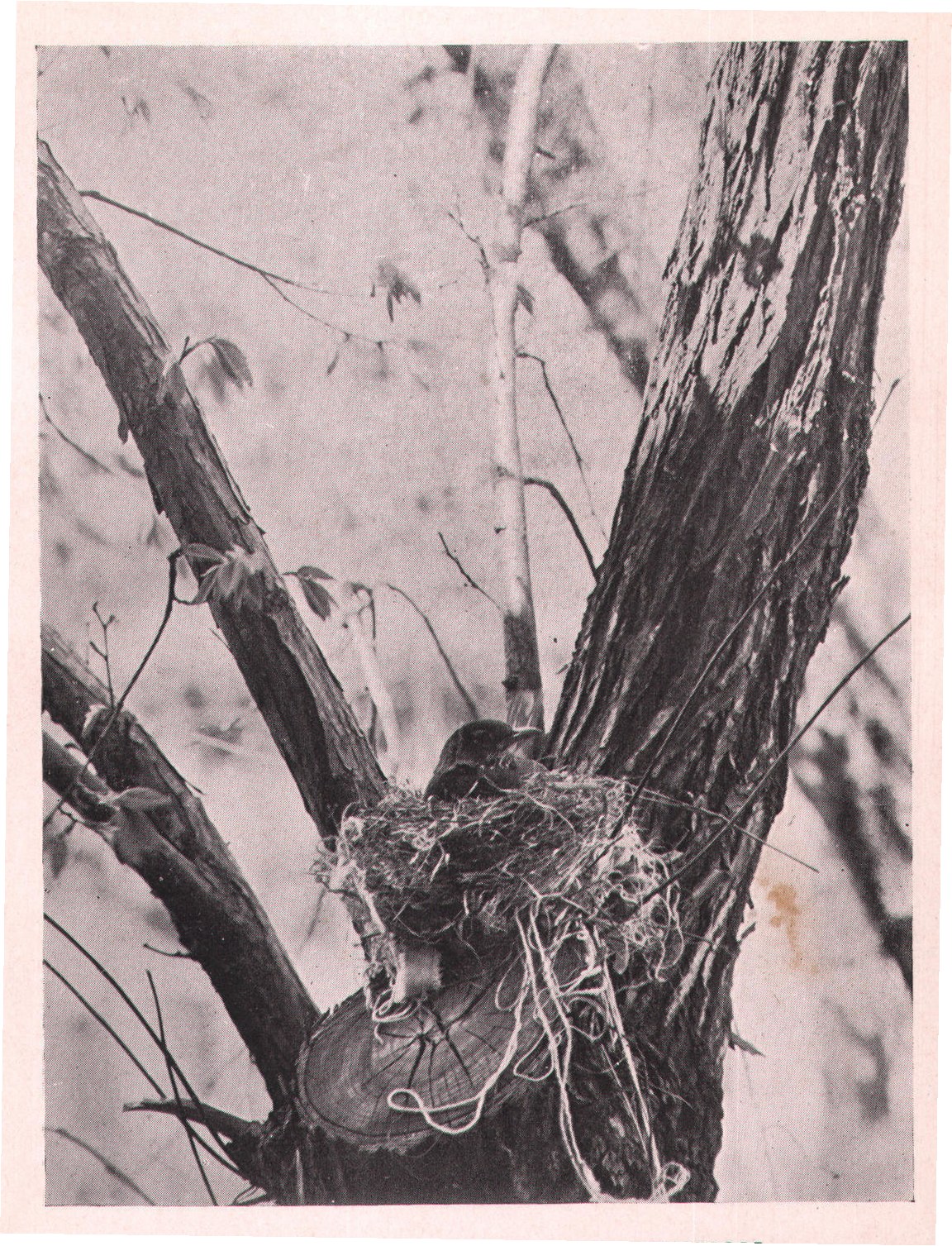
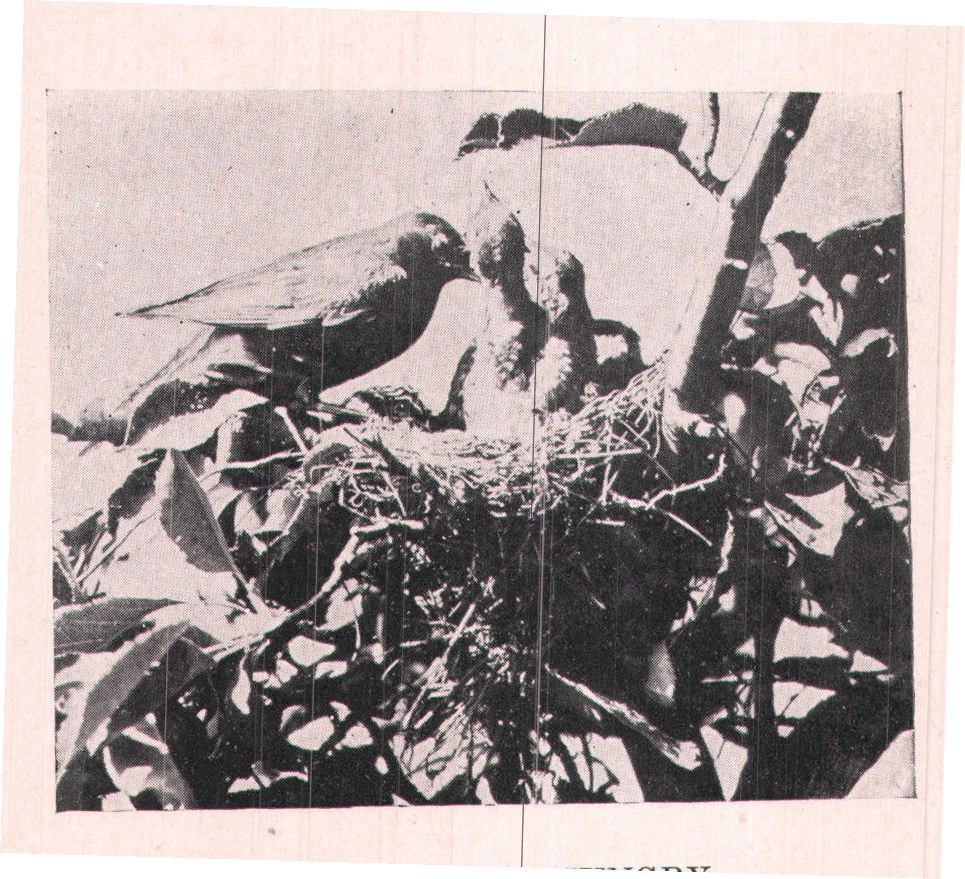
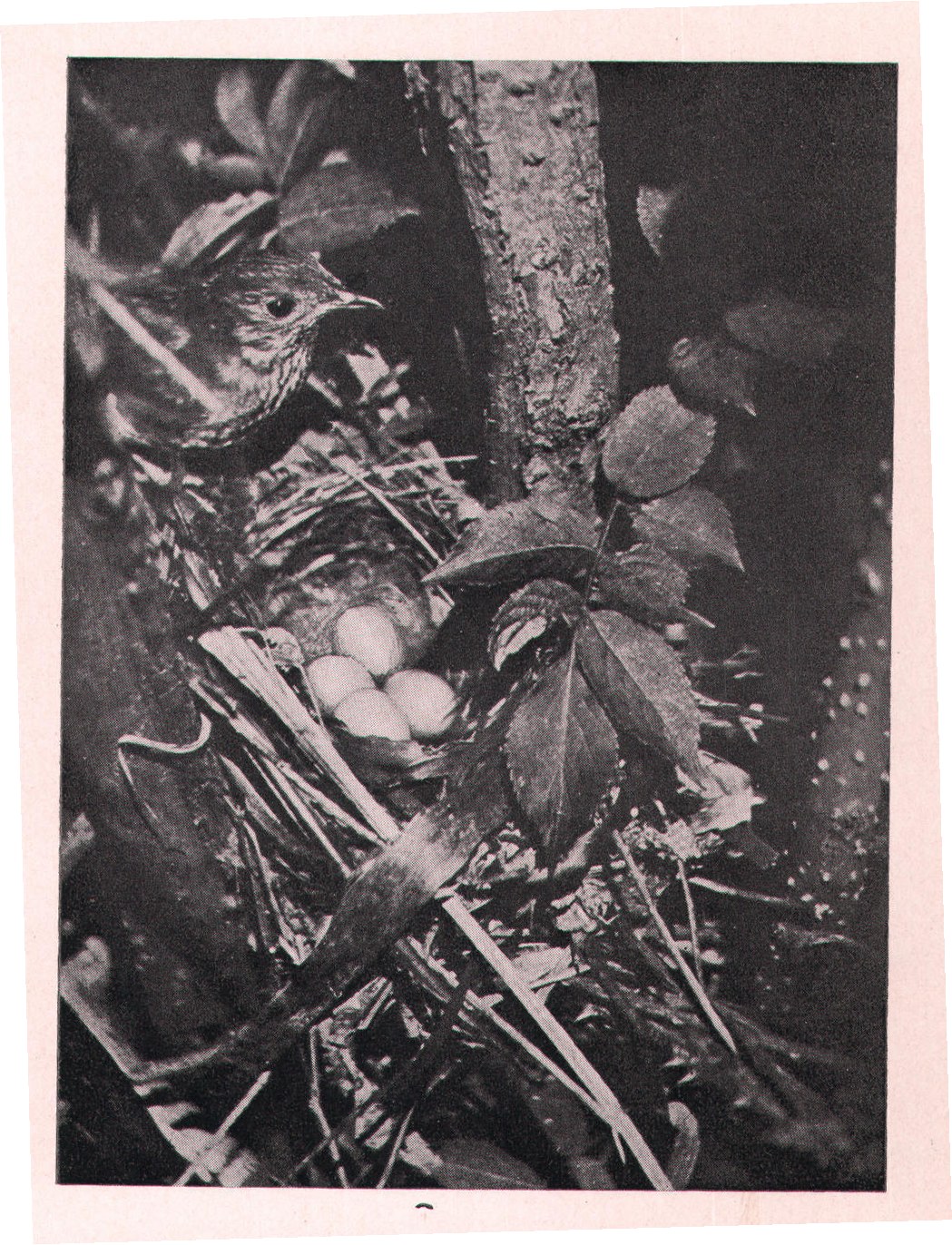
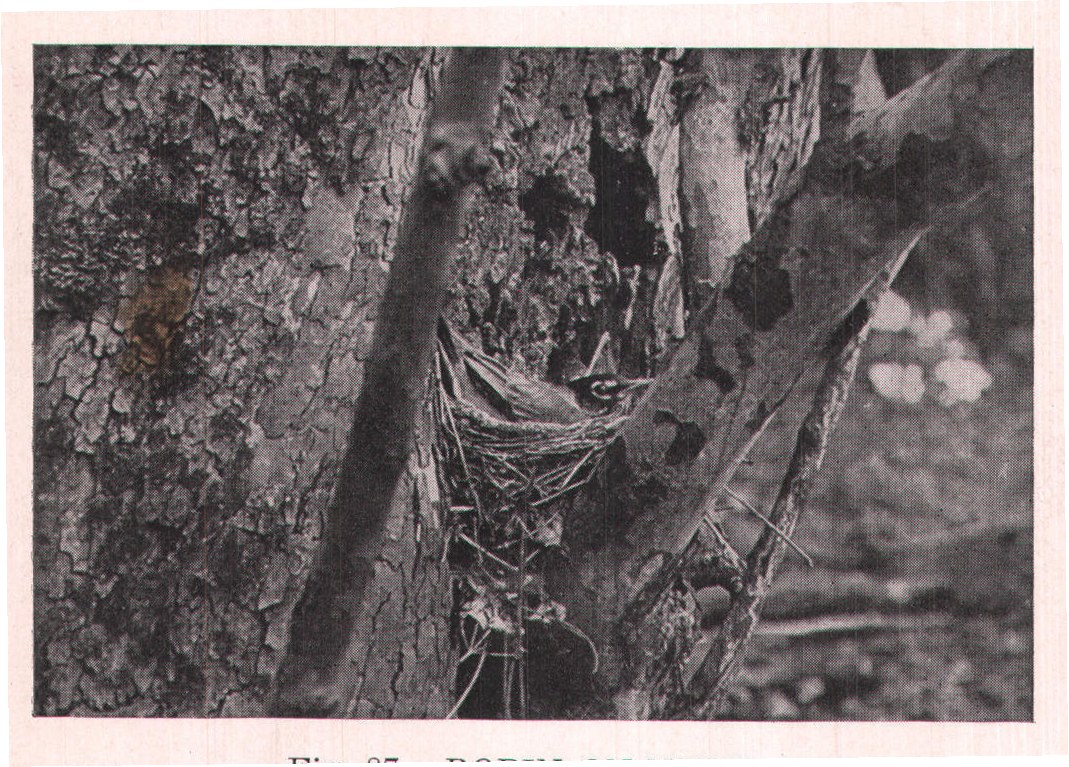
In the same city, another pair of Robins dwelt. They built their nest in an elm tree in front of a large block. A front of a large block. A picture is shown of this Robin sitting upon the nest,- Fig. 100. Veery about to settle upon her greenish-blue eggs. taken from a window in the block. English Sparrows continually pestered this pair of birds. Although nesting material was abundant on every hand, the sparrows, out of pure deviltry, chose to steal it from the Robin rather than pick it up from the ground. One after another would slyly steal up under the nest, grasp the end of a straw or string, pull it from its fastening and, with a gleeful chuckle, fly away with it. These depredations continued until the bottom of the nest was torn out and the Robin eggs were dashed to the paving below.
Similar tragedies are enacted hundreds of times every year in all cities and towns yet we still sometimes meet misguided people who will undertake to defend the English Sparrow. The person who can invent the surest, most effective and swiftest means of ridding our country of these pests will be one of the greatest benefactors of mankind.