C.a. Reed
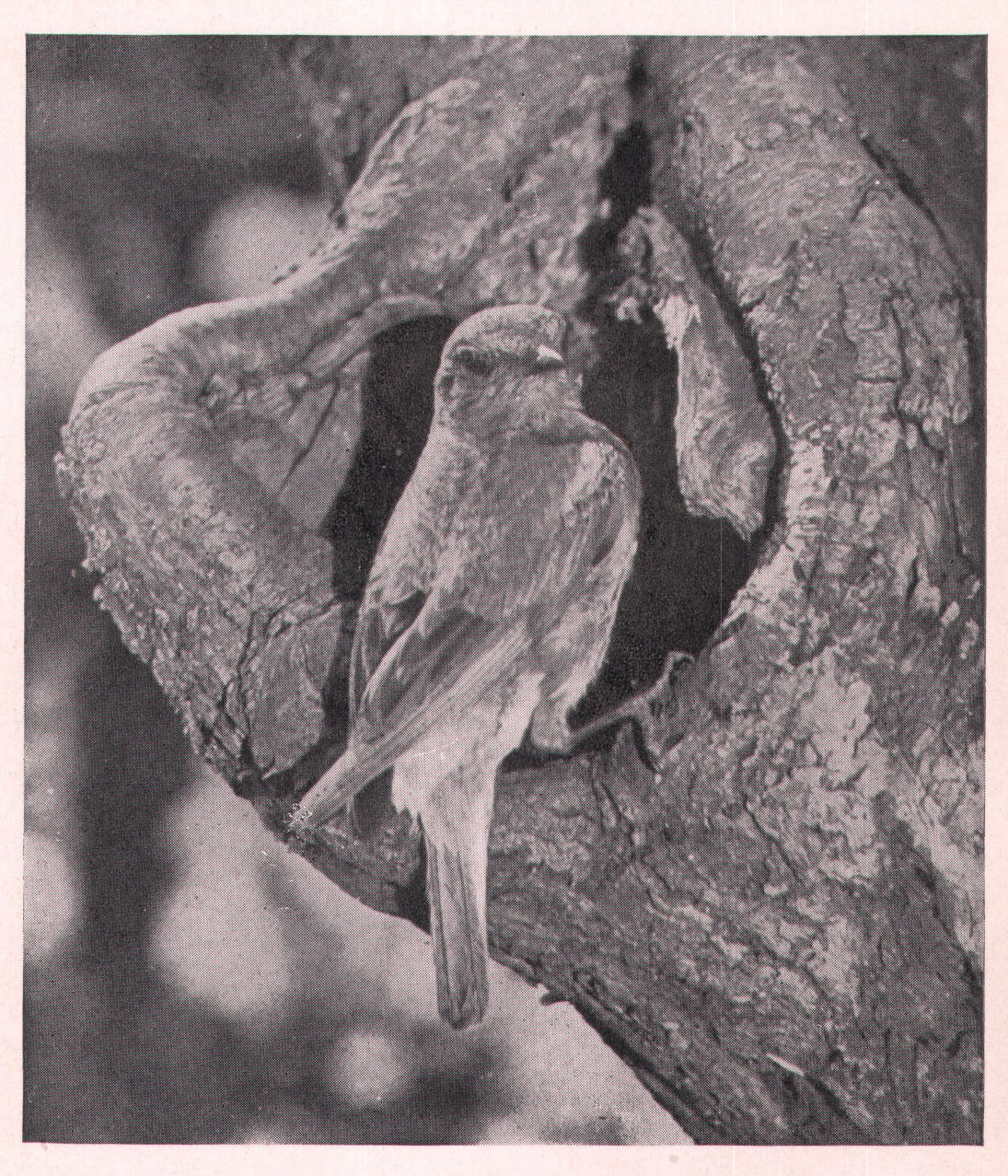
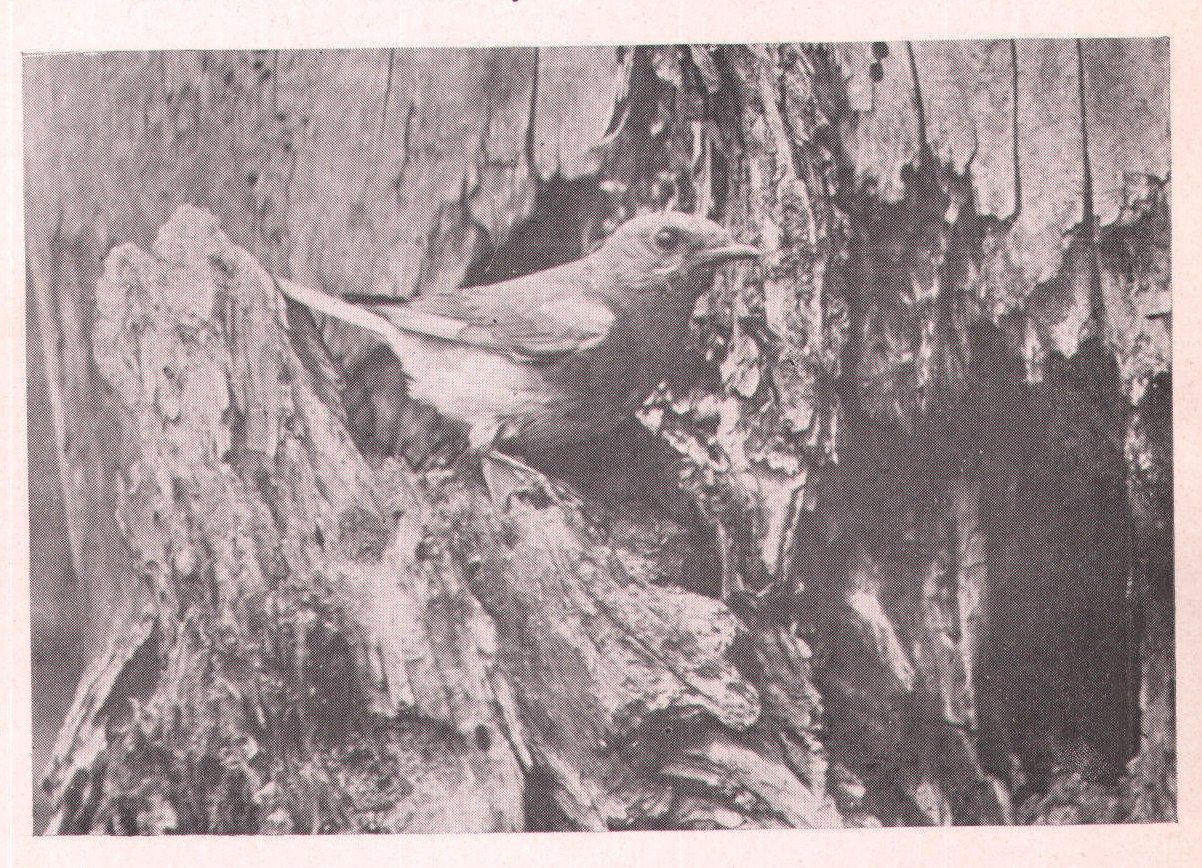
Illuminated by reflected sunlight from a large mirror. This nest was on the north side of the tree in shadow so that without the mirror pictures could not have been secured. large mirror makes the place as light as though it were in the bright sunlight.
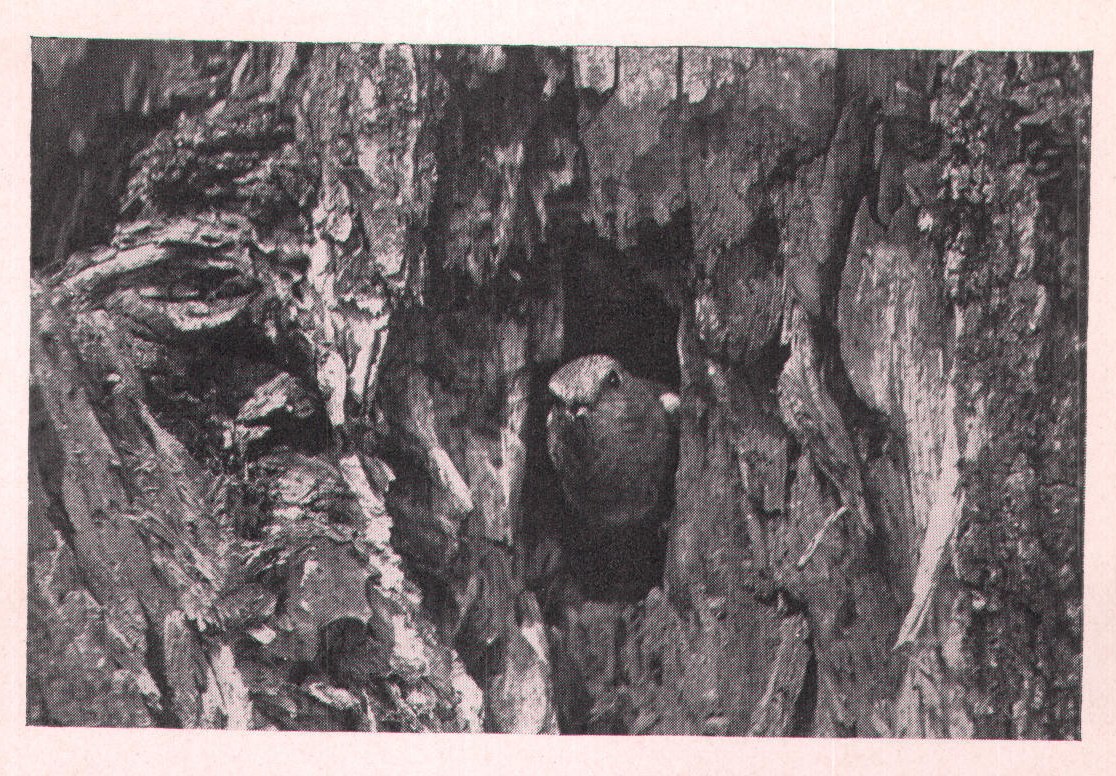
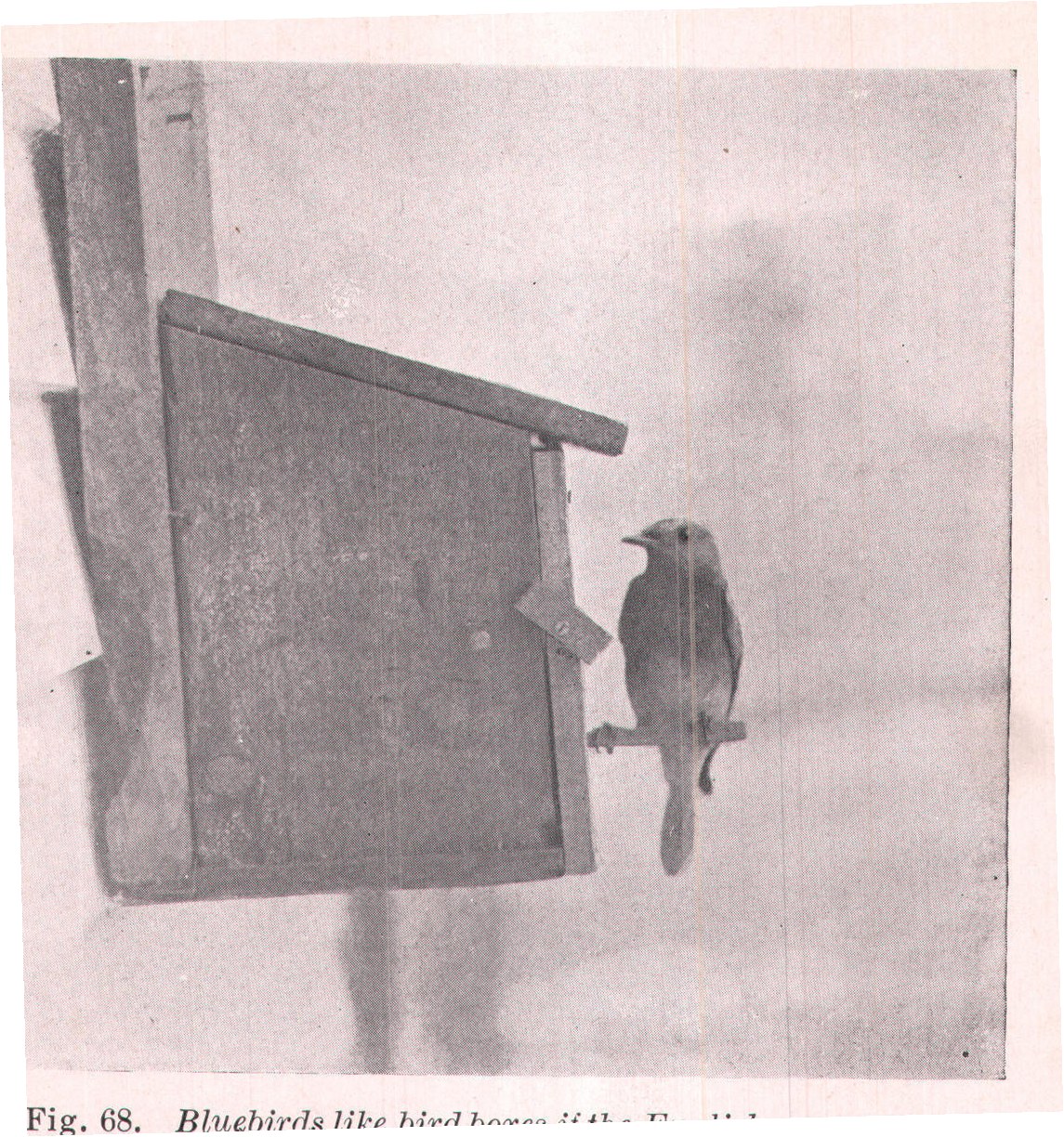
We soon have the camera in readiness and retire to a place of concealment behind the next tree, holding a long black linen thread the other end of which is attached to a little device to spring the shutter. As the male bird flits to and fro in the sunlight, his blue coat is dazzling in its bril- liancy. His sombre colored but equally melodious mate is very anxious to examine her household but evidently is afraid the square box in front of her door is some sort of a trap. She makes a great many false starts but each successive move brings her a little nearer to the goal until at last she gathers all her courage and alights on the nesting hole. Fig. 68. Bluebirds like bird boxes if the English sparrows are kept away.
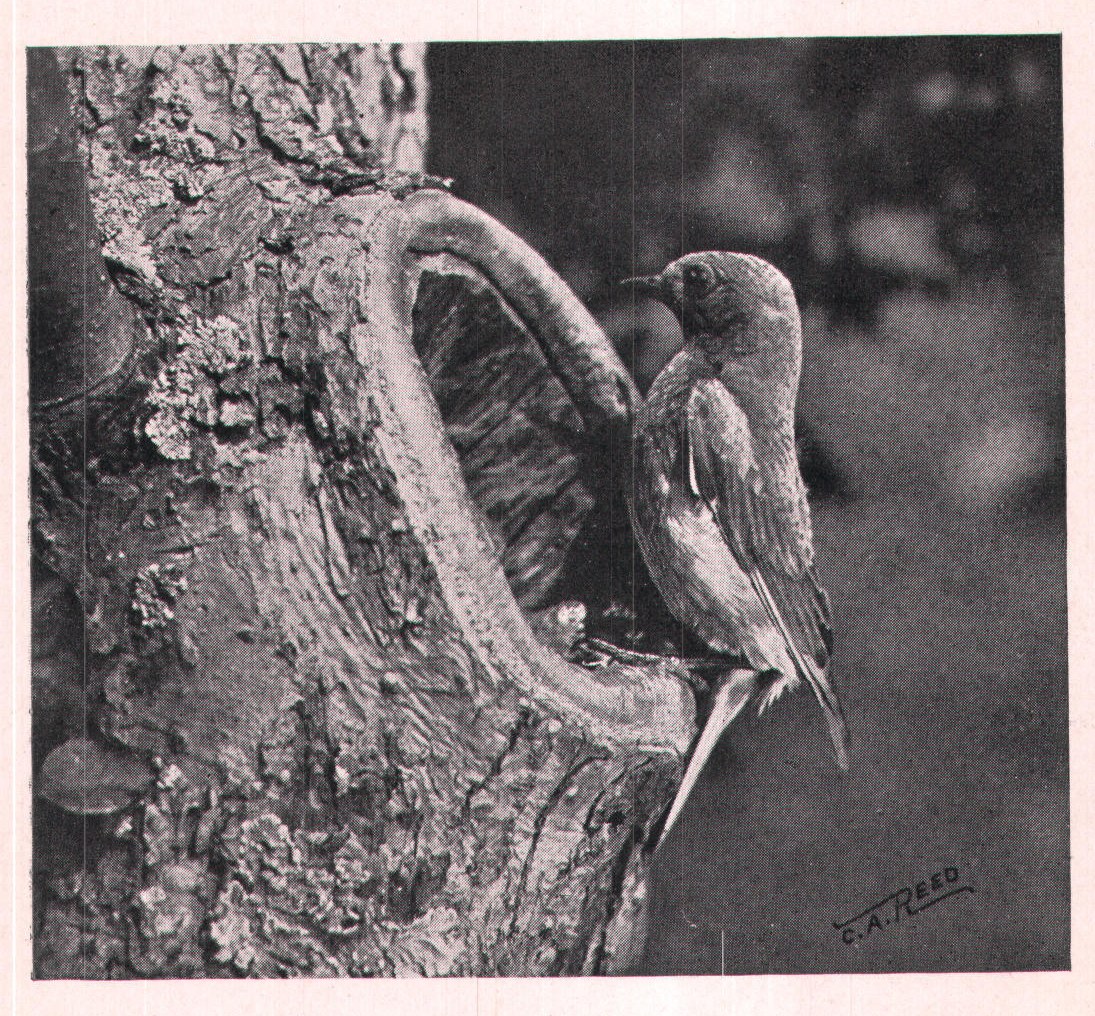
Instantly a dazed expression comes over her. Something is wrong. She looks long and steadily at the dazzling rewrong. She looks long and steadily at the dazzling reflection coming from down in the grass, then peeks around the limb at the sun that is still doing duty in its proper place. The problem proved too great for her or else she lacked the time to study over it longer, for she dived down to her nest to see how her little ones were faring.
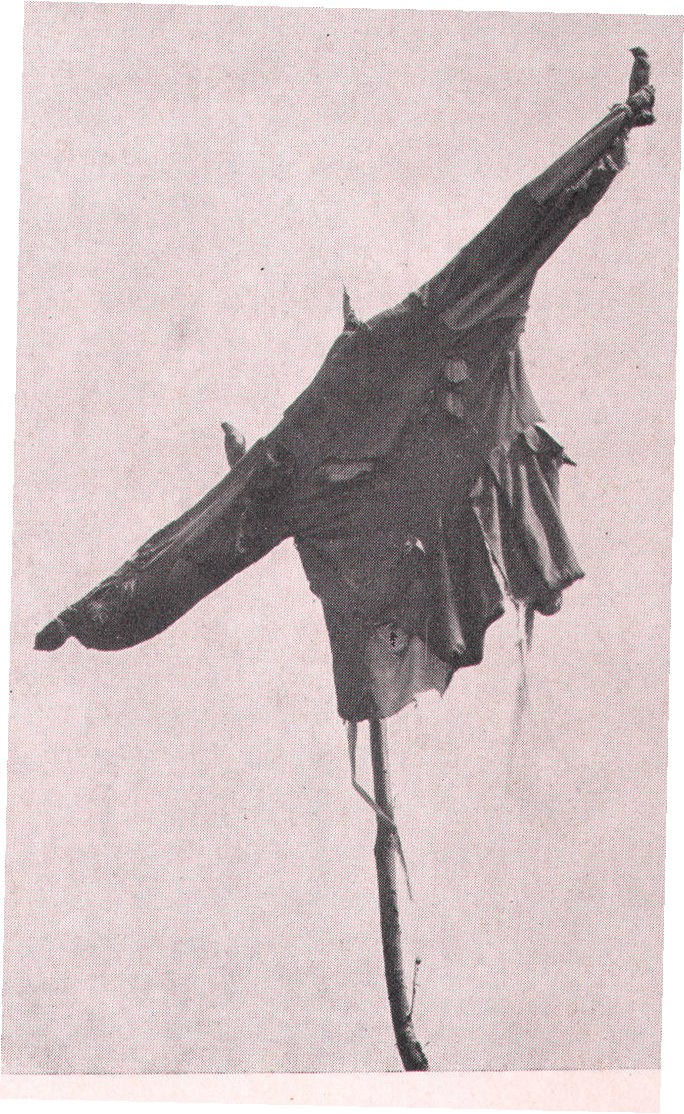
A certain twig on a dead limb of the next tree, was a These Bluebirds nested in one arm of this scare-crow. favorite perch for her. It allowed her a clear view of the ground for thirty feet about; often she would drop into the grass and capture grasshoppers or caterpillars and bear them off to the nest. The male bird, because of fear, absolutely refused to have his portrait made. He often brought morsels of food and gave them to his mate to carry to the little ones,--rather ungallant of Mr. Bluebird to thus expose his mate to fancied dangers he dare not face.
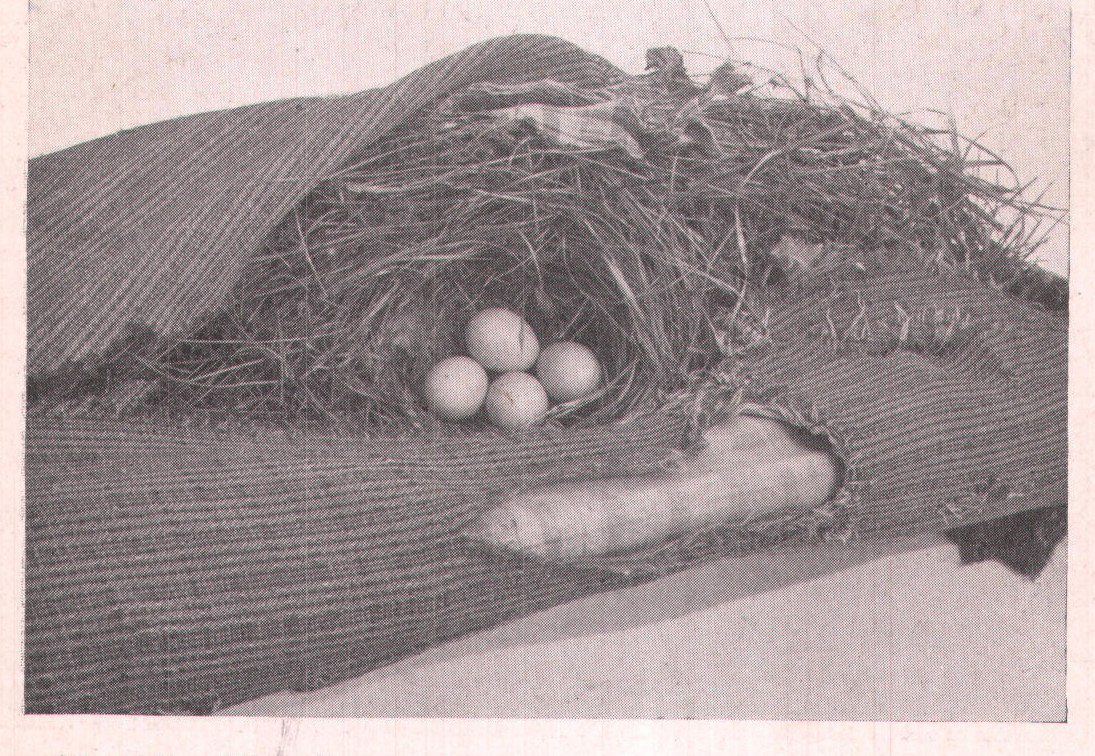
Another pair of Bluebirds has nested annually, for years, in the top of a certain fence post. This same nest has, on several occasions, furnished a little joke at the expense of some of my friends. As we approached the field in which this post was located, I would casually remark that I had a little Bluebird-friend that would allow me to Fig. 70. The sleeve of scare-crow opened so as to show the nest and eggs. put my arm about her without any attempt to get away. Naturally such a statement would be viewed with some doubt and I would be called upon for proof. The proof was easy, for I had but to step up to the post and put my arm about it, the bird at the time being sitting closely upon the eggs within. Usually two broods a year were reared in this secure home.
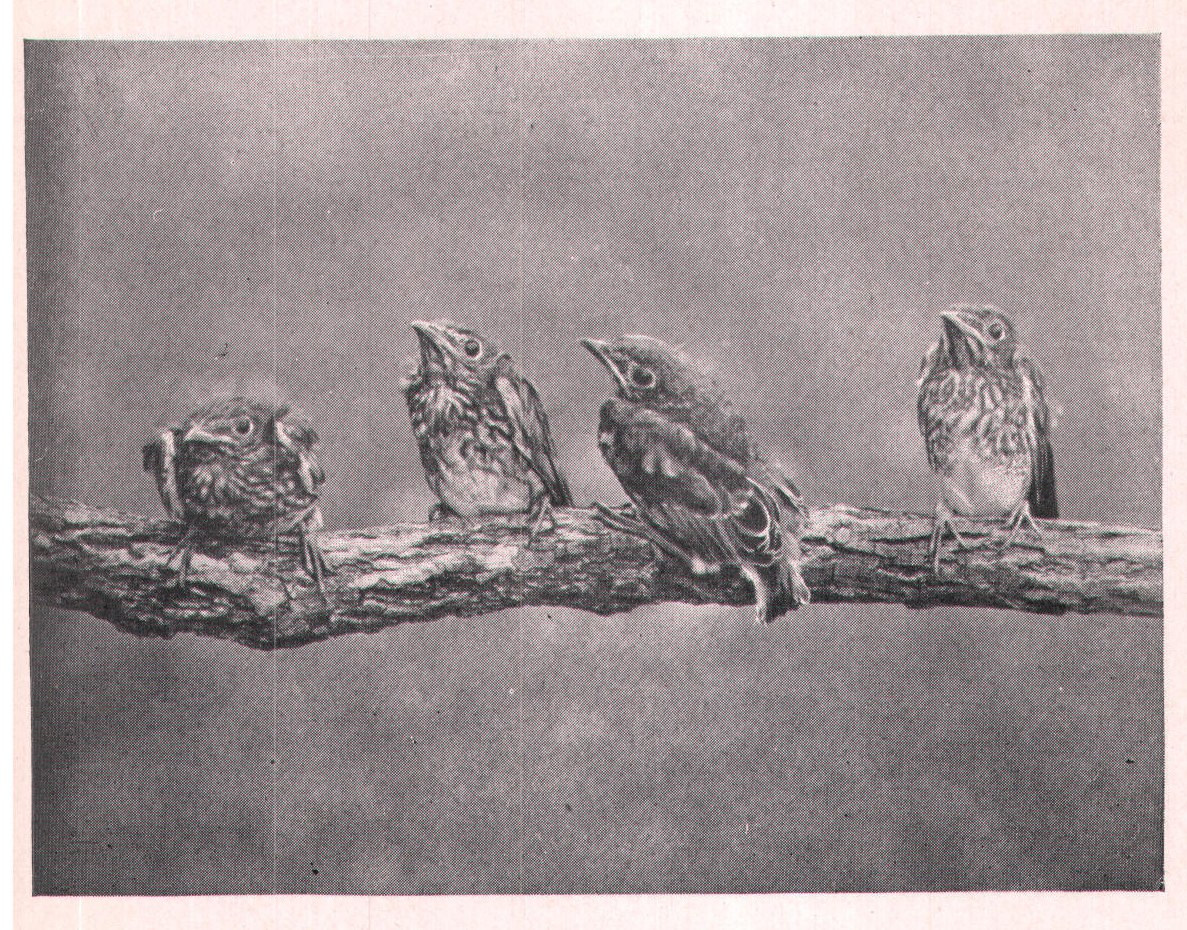
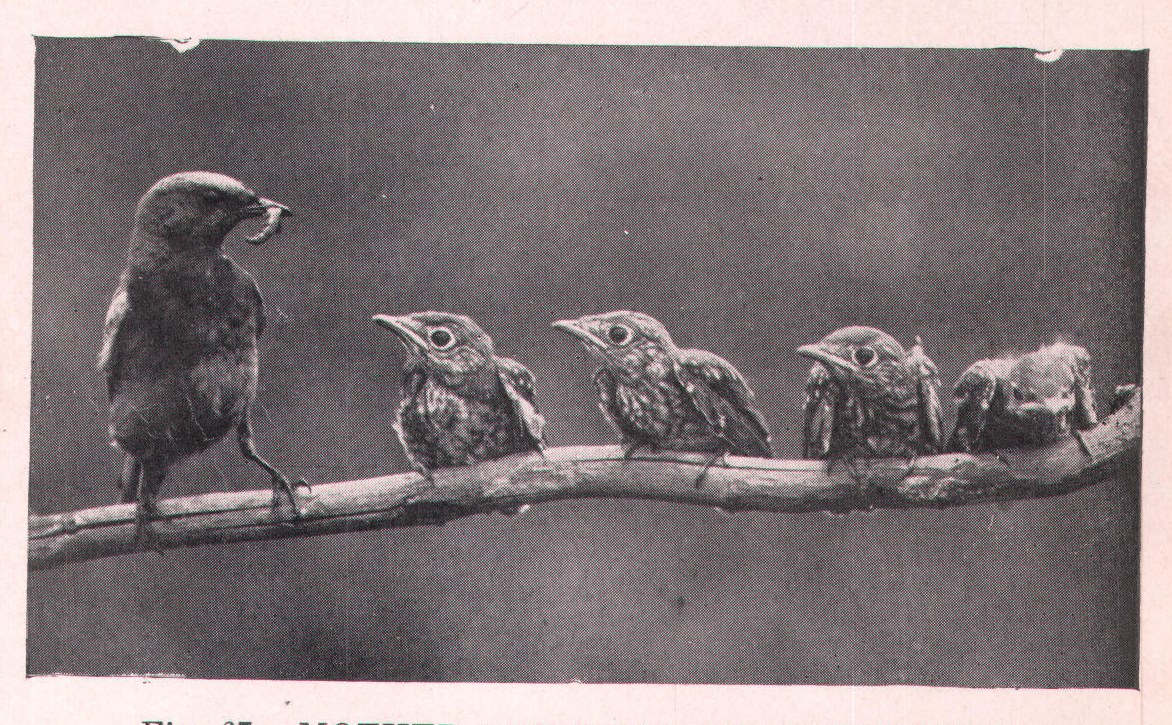
Little bluebirds have blue backs and brownish breasts, like their parents but, like all members of the thrush family to which Bluebirds belong, they have spotted breasts and more or less spotting on their backs. This plumage is lost at the first moult and they become just like their parents. Bluebirds do not always nest in hollow trees or fences; many a boy or girl has a little bird box built expressly for their use, and they are very glad to use them if English sparrows can be kept from pestering them. They also sometimes build in very odd places as can be seen by the photographs of the nest in the sleeve of a scarecrow.