Home › Bird Masons › Bird Masons: Phoebes
Bird Masons: Phoebes
Besides under bridges, Phoebes make their nests in niches in cliffs, under sheds and barns, under overhanging banks, among the stones of old cellar walls, in fact any- This nest is under the bridge shown in Fig. 42. where so that the nest will be shaded and protected from sight and the weather.
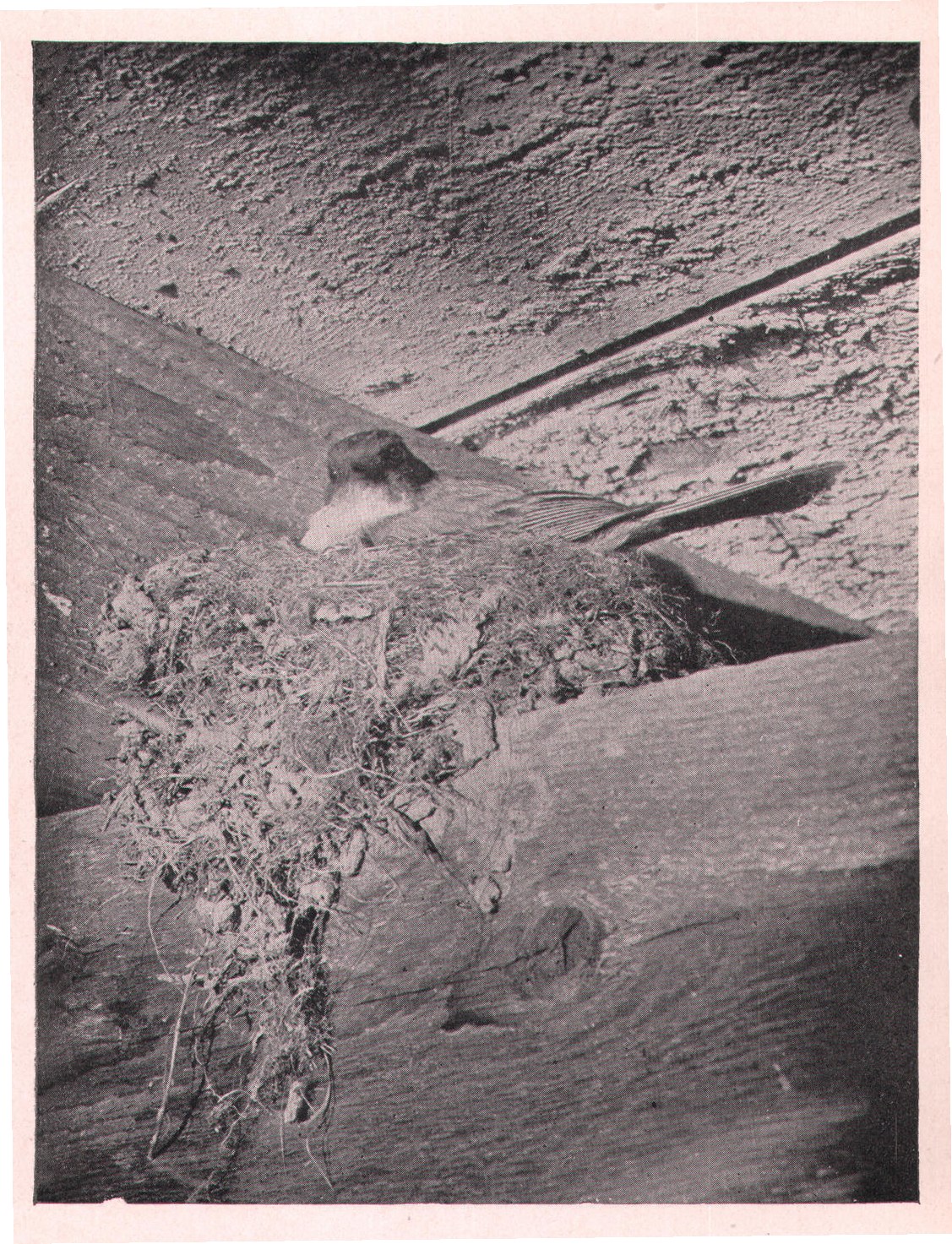
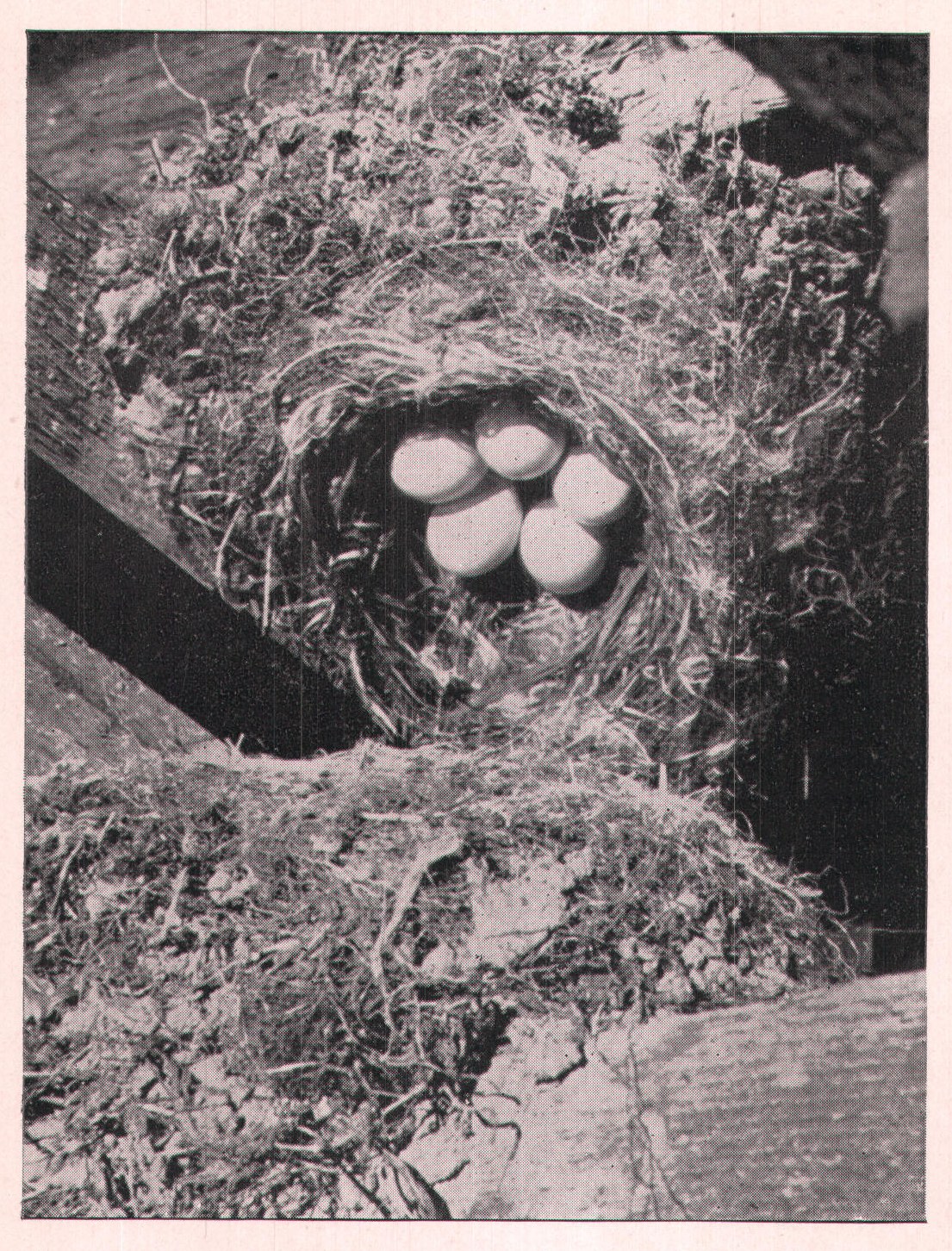
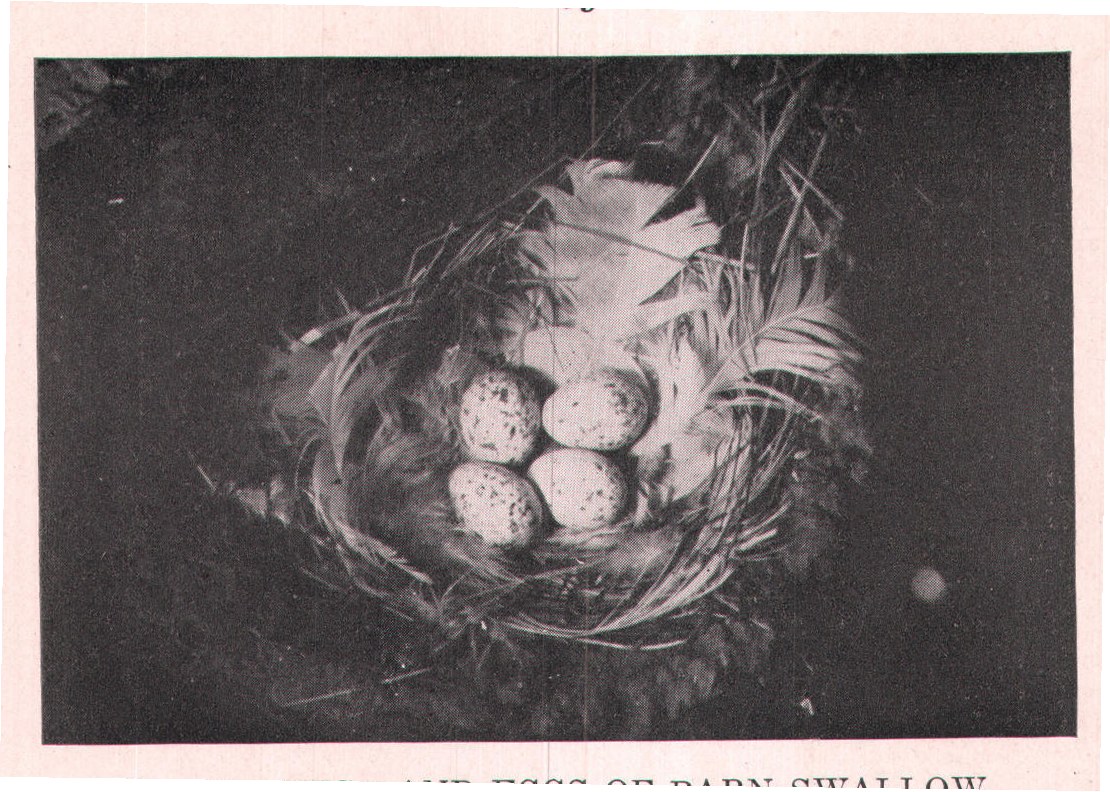
Because of the comparative darkness of the situations they choose, in which to build their homes, it is quite difficult to make satisfactory pictures of Phoebes feeding their young. Not only that, but the birds are so active that it is difficult to show the feeding process even though the light were good. Usually, reflected sunlight from a large mirror has to be used to secure illumination sufficient to make an instantaneous exposure. A picture of a Phoebe sitting upon its nest in a shed is shown, taken in this manner; also a picture of the eggs in the nest, taken by having another mirror inverted above the nest.
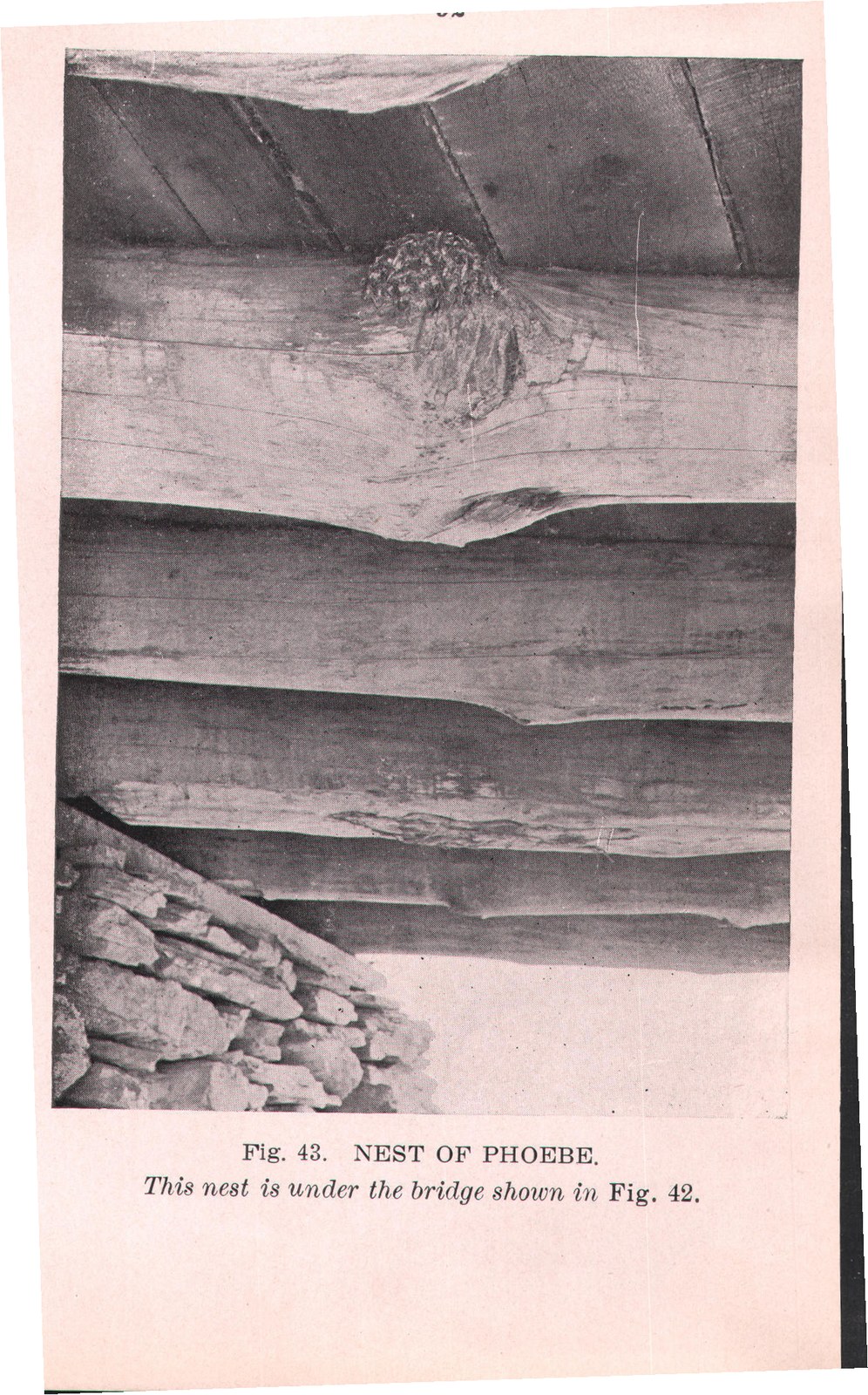
When a suburban trolley line crossed a certain brook, they put in very heavy iron girders for the foundation. A pair of Phoebes took a liking to this spot and built their moss-covered house on the lower flange of one girder. Here they laid their eggs and reared the family. Cars passed every thirty minutes, or as regularly as street cars usually go to such a schedule, on rails but two feet above the head of the mother as she sat upon the nest. The bird must have been entirely devoid of nerves for she never moved as the cars rumbled overhead with a clatter and roar that sounded fearful from underneath. I spent several hours under there and I was very glad to leave at the end of that time. A mirror situated on the bank below the bridge was used to throw a spot of light on the nest. The camera was set on a tripod in the water, which was only about six inches deep, while I had to crouch on a few small stones and try to keep my balance. Some cloth, tacked to the planking above and draping down to the water screened the camera and myself from the birds. From time to time, I had to push the mirror slightly so as to keep the little spot of sunlight where it would cover the nest. It was a very easy matter to secure pictures of the mother as she stood on the edge This nest is on a beam in a shed. Sun was thrown on it by a large mirror.
This is the same nest shown in Fig. 44. Two mirrors were used, one to reflect sunlight and the other above the nest to show the eggs.
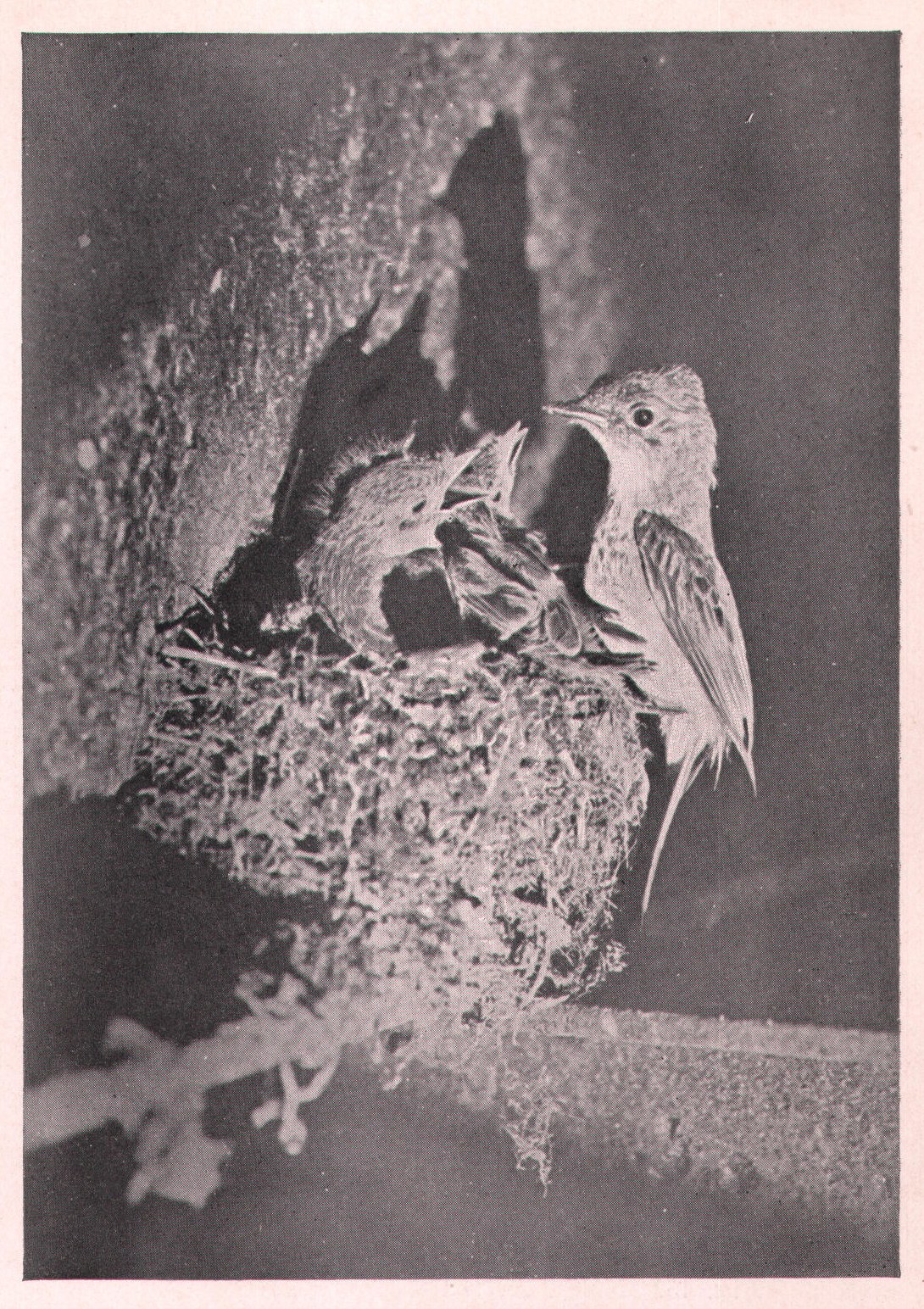
Taken just after feeding, by reflected sunlight. The actual feeding was always done while the bird was hovering and was too rapid to be photographed in 1-100 of a second. of the nest looking at the extraordinary light that shone from the bank, but I was not able to get a satisfactory picture of her actually feeding the little ones. In fact, most of the time, she would hover over the nest and feed them while a-wing, then drop to the edge and watch either the lens or the light.
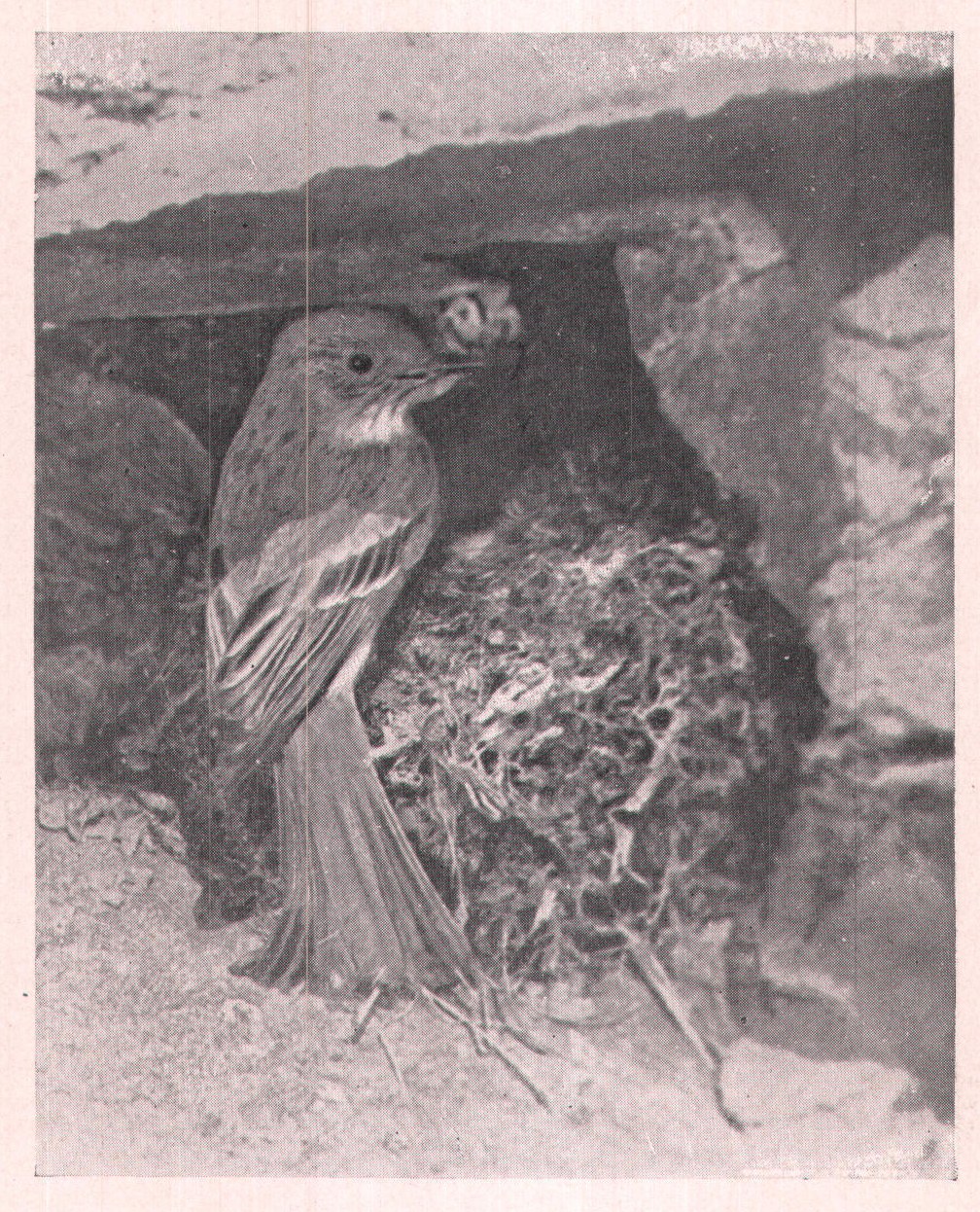
Fig. 47. This Phoebe nest was in an old cellar hole. Always lined with soft feathers.
The male bird did not come to the nest at all, while I was there, but he encouraged his mate to do so for he would stand outside, flirt his tail and utter many a harsh "phoe-be" as she was going under the bridge; he also often gave a rather pretty trill as she came out, just as though he were praising her for her bravery in going where he dared not. Most of the food brought to the nest was small moths that were caught flying over or about the edges of the brook.