Home › Volumes › Moths › Hawk Moths (Sphinx Moths)
Hog Sphinx
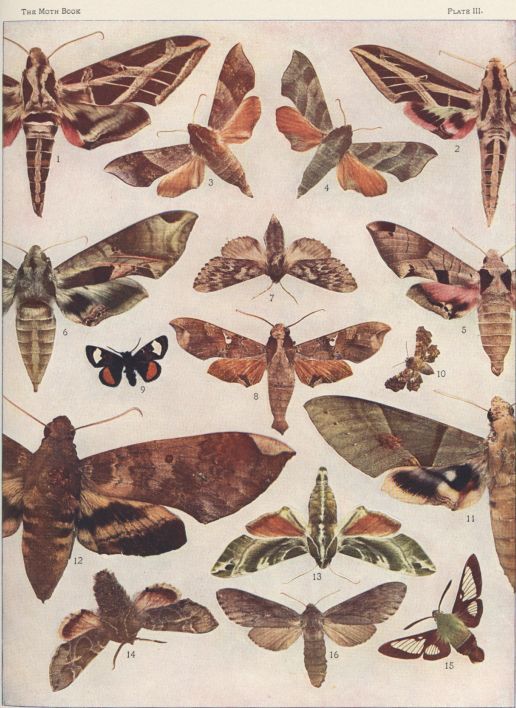
The caterpillar, of which we give a figure, feeds upon wild and domestic grape-vines, and also upon the Virginia Creeper. It is a very common insect in the Atlantic States, and ranges as far west as Kansas and Iowa. It has been regarded as injurious to vineyards, but the damage done is inconsiderable, and the insects can easily be combated by picking off the larvae from the vines and crushing them under foot. The reason why these insects do comparatively small damage is perhaps found in the fact that they appear to be especially subject to the attacks of a small hymenopterous parasite, belonging to the family Ichneumonidae. The female ichneumon-fly deposits her eggs upon the epidermis of the young caterpillar. As soon as the eggs hatch, the grub penetrates the body of the caterpillar and feeds upon the fatty tissues lying just under the skin. Before the caterpillar reaches maturity the grubs emerge from beneath the skin, and attaching themselves to the epidermis, proceed to weave about themselves little white cocoons, in which they are transformed into perfect insects, emerging to repeat the cycle of life. Caterpillars which have been thus parasitized do not survive the ordeal. The accompanying cut shows a larva upon which the ichneumon-flies have done their deadly work. The insect, which accomplishes the task of destruction imposed upon it in the economy of nature, is very small. The figure given herewith shows it of its natural size, and also enlarged, so that its structural peculiarities may be more easily recognized. The species which we are considering shares this liability to parasitism with its congeners, as well as with the representatives of many other genera of the Sphingidae. I was greatly annoyed a number of years ago by having a large series of the larvae of the beautiful Darapsa versicolor, which I had collected in their early stages, destroyed by this ichneumon-fly, and the following summer, and, in fact, for several summers following, the larvae of D. versicolor, which had been for awhile quite abundant in certain localities known to me, almost entirely disappeared. In one ravine, where I had obtained them by the hundreds, they were not to be found. I account for their disappearance by the unusual numbers of the parasites which had infested them that summer.
The larva of myron undergoes pupation in a loose cocoon of coarsely woven threads of silk, which it spins under leaves at the surface of the ground. In this respect its habits are strictly like those of the other species of the genus.