Home › Volumes › Moths › Giant Silkworm Moths
Buck-moth
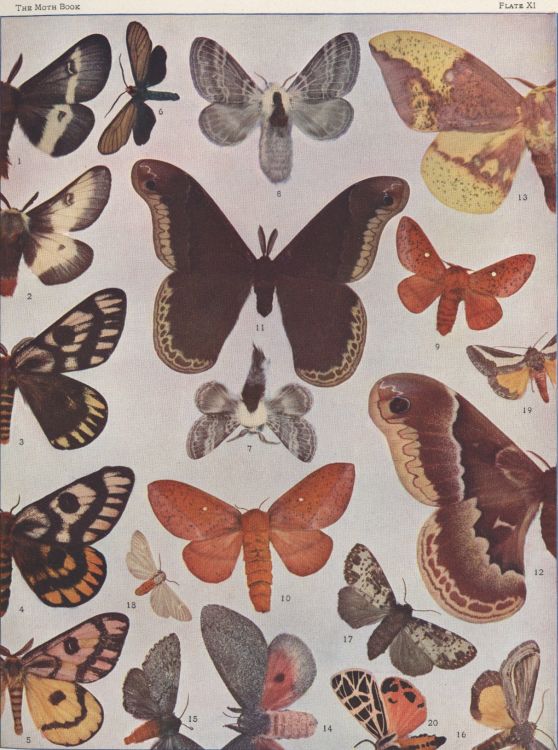
In the fall of the year, when the leaves are falling and the days are still mellow and warm, the Buck-moths may be seen flitting through the air at noonday. They especially frequent the edges of groves of oaks. Upon the twigs of these trees, as well as occasionally upon willows, wild cherry-trees, and hazels, they deposit their eggs in clusters, as represented in Figure 44. The larvae, which are gregarious and have stinging spines or bristles upon the somites, hatch in the latter part of April or in May, according to latitude, and after undergoing five molts, pupate in the ground. The moths emerge in the fall, though a few winter over in the soil until the next spring, when they emerge, or they may even remain dormant until the following fall.
The wings are semi-translucent, and in some specimens are apparently almost devoid of scales. The insects are diurnal, or semi-crepuscular in their habit, and I have never known them to be attracted to artificial light. The name "Buck-moths" is said to have been given to them because they fly at the time when deer-stalking is in order.
The insect ranges from Maine and Nova Scotia to Florida and westward to the eastern edge of the great plains. In the Carolinas it is very common, especially in groves of the Black-jack Oak, which grow on barren uplands.