Home › Volumes › Moths › Owlet Moths
Army Worm
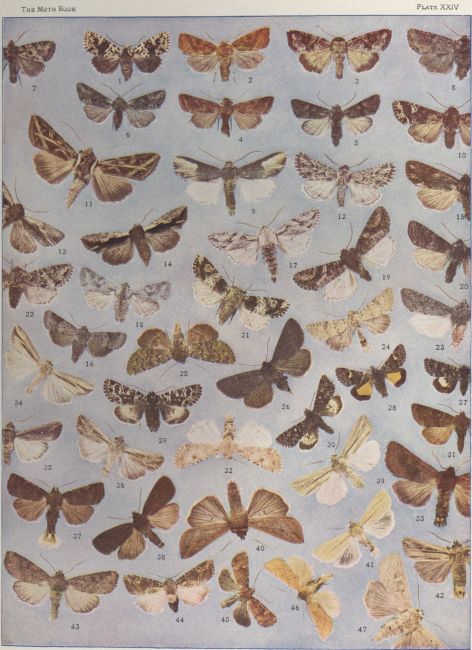
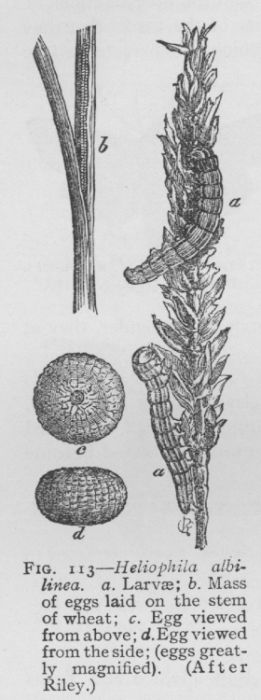
This species, the larva of which is known as the "Northern Army Worm," or simply as the "Army Worm," is found from the Atlantic to the Rocky Mountains, and from Canada to Texas and southward at suitable elevations upon the higher plateaus of northern Mexico. It appears occasionally in vast numbers, and is regarded by the farmer and the horticulturist as one of those pests against the ravages of which they must direct a great deal of energy. The first appearance of these insects in great numbers is recorded as having occurred in New Hampshire and Massachusetts in the year 1743. In the year 1770 they devastated the fertile fields of the valley of the Connecticut. They devoured the grasses and cereals, but neglected the pumpkins and potatoes. The chronicler of this invasion says: "Had it not been for pumpkins, which were exceedingly abundant, and potatoes, the people would have greatly suffered for food. As it was, great privation was felt on account of the loss of grass and grain." Successive attacks of the insect have been made since then upon the crops in various parts of the country. The year 1861 is memorable as having been marked by their ravages, which were particularly noticeable in the State of Missouri and in southern Illinois. An excellent account of this invasion has been published by Prof. C. V. Riley in his " Second Annual Report" as State Entomologist of Missouri. It appears from the investigations of those who are familiar with the habits of the insect that they appear in greatest numbers in years which are characterized by being wet and cool, following years in which there has been drought. Such conditions seem to be favorable to the development of the insects in great swarms. Their appearance in the fields is often at first not observed; but when, having attained considerable size, the supply of grain and grasses gives out, and they begin to migrate in vast bodies in search of provender, they at once attract attention.
The best remedy for these pests is to burn over grass lands in the winter, to keep the fence-rows clear of grass and weeds, and to plough under the land in the spring or the fall. Untilled grass lands on which crops are not properly rotated become centres of infection.