Home › Volumes › American Animals › Beavers
Canadian Beaver
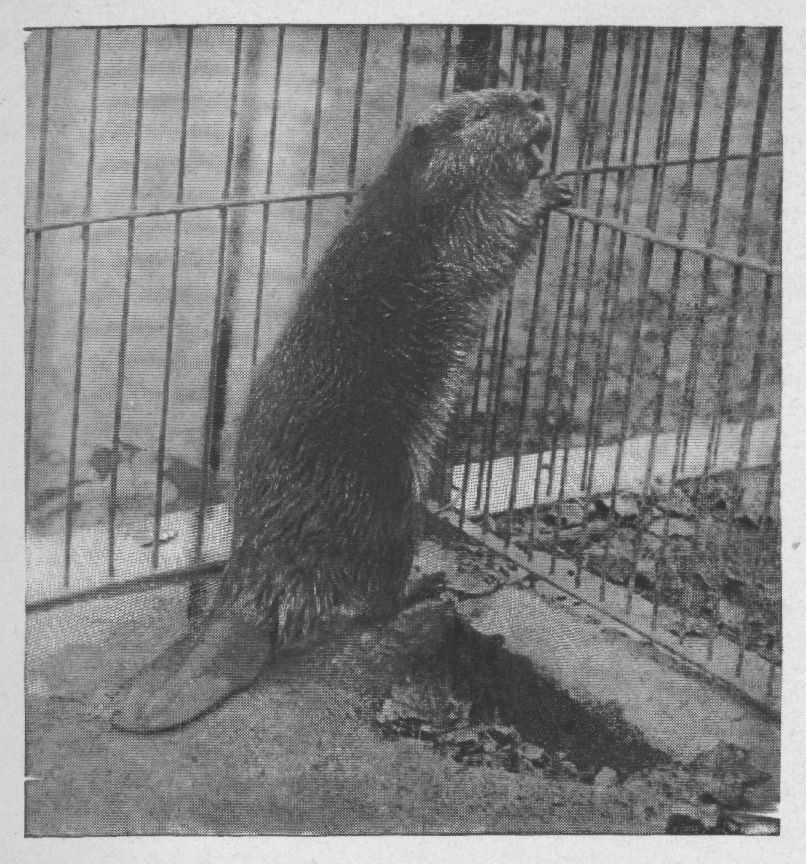
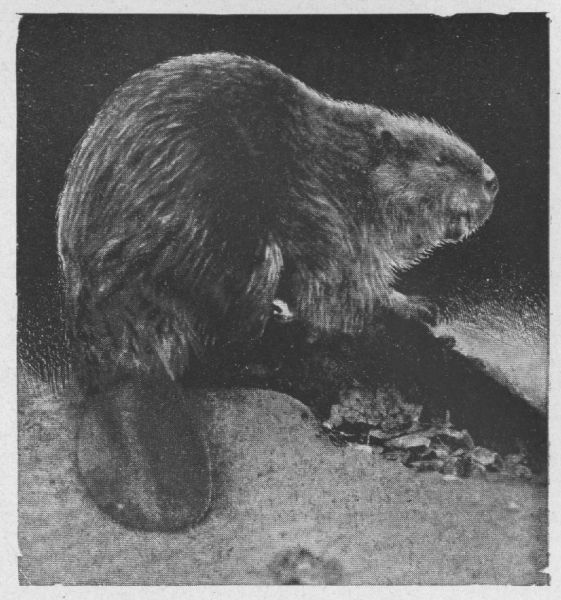
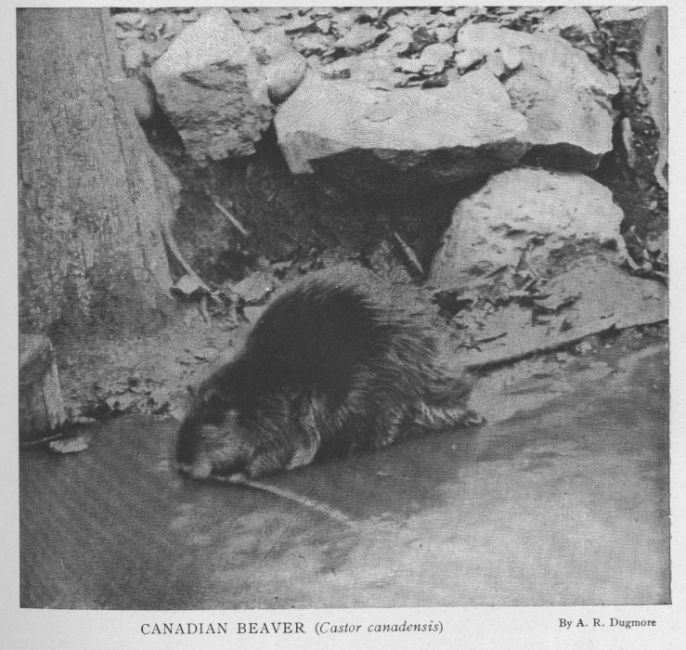
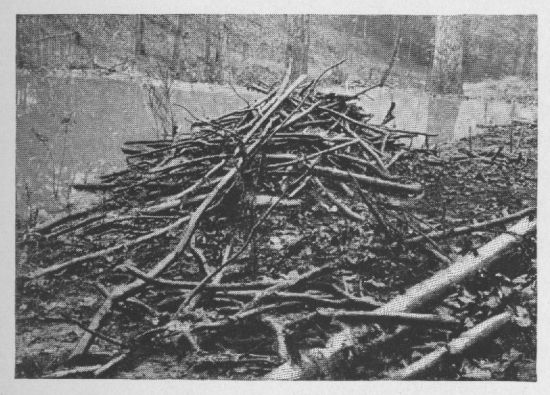
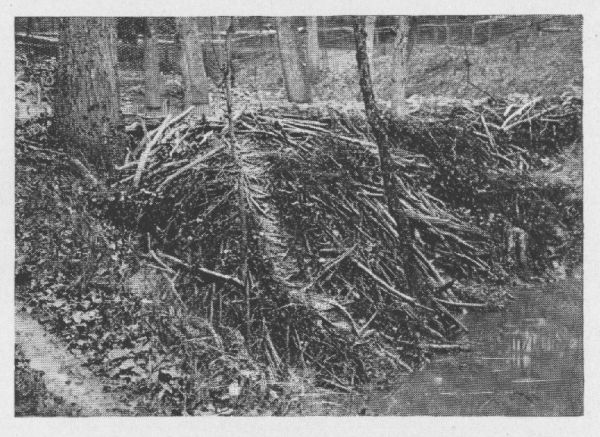
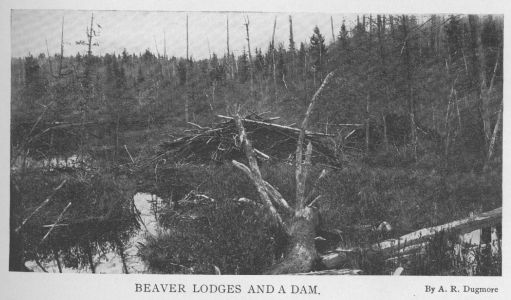
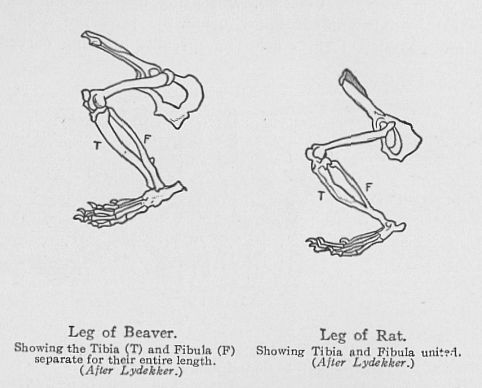
Length.—44 inches.
Description.—Tail and feet as described above, ears short. Body thick and heavy, closely covered with fur. Colour dark bay or blackish-brown, hairs tipped with chestnut, becoming brighter on the head, sides of the neck and rump; ears black, feet, legs and underparts seal-brown.
Range.—Northeastern North America, now nearly extinct within the United States, represented to the South and West by slightly different geographic races.
Range.—Southern and lower Middle States. Now almost extinct, though still found in parts of North Carolina.
Beavers are creatures with whose life history everyone is supposed to be more or less familiar; the outstanding features of their lives having been written and read over and over again by each following generation. Yet they are still objects of the most intense interest to all who desire to read Nature either at first or second hand.
They are so very like some humble, primitive race of people of peaceful disposition and few wants, industrious and practical in all their affairs, and apparently depending more upon reason and less upon instinct than do the majority of the forest folk. For while it is unquestionably true that almost all of the higher wild animals must use their reasoning powers to think out the various problems of their daily lives, it is equally certain that instinct is of even greater importance to them.
Just as the lone trapper or hunter, if lacking instinct similar to theirs, and forced to rely wholly upon reason to wrest a living from Nature, would be pretty certain to starve before the winter was half gone.
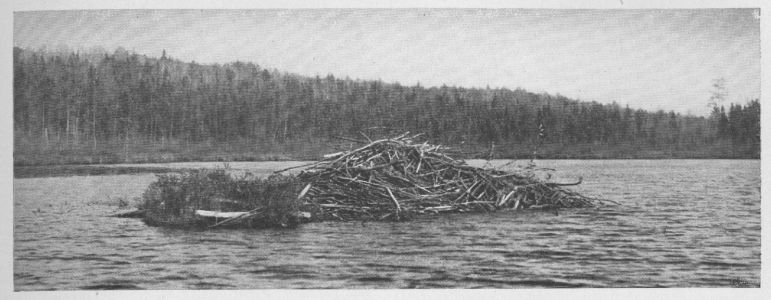
Everyone knows that it is the beavers' custom to dam up small streams and build their thatched and mud-plastered log cabins on the margins of the ponds thus made. But the beavers themselves have been so trapped and persecuted as to have been fairly driven to the most remote and secluded parts of the wilderness, with men still hot on their trail, and closing in doggedly with murderous determination when with each recurring autumn the beaver fur again becomes thick and silky to tempt their greed.
At present the scattered families of this inoffensive fugitive race scarcely dare to raise a lodge of any sort, much less anything so conspicuous as a dam, and so are compelled to hide in secret burrows beneath the bank, like their cousins of the Old World, who have suffered from man's unwelcome presence for so much longer a period.
In most parts of this country beavers are supposed to have the protection of the law; but along the hidden rivers, where the few survivors lurk, law is little more than a byword, and just as long as beaver skins are allowed to be bought and sold, any attempt to protect them is bound to prove futile.
If England and America could agree to make the possession of beaver skins illegal anywhere within their boundaries, and punishable by a heavy fine or imprisonment, good results would certainly follow; for the Hudson's Bay Fur Company would then be obliged to refuse to handle beaver skins, and the trappers to leave them alone. Even then it would probably be a number of years before the beavers would venture within sound of civilization or lose even a little of their well-founded terror of man.
When a pair of beavers, after having been driven in desperation from place to place, finally come upon some hidden forest brook where they think that perhaps at last men will permit them to settle and be happy in their own way for a few years, their first act is to decide upon a suitable location for their pond.
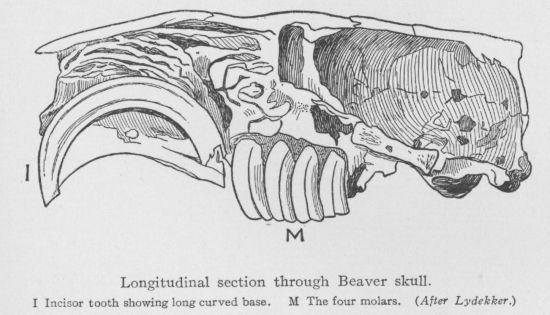
Then they go to work felling trees for the dam. In order to cut down a tree they gnaw deep parallel grooves around the trunk and then rip out the wood left between these grooves in large chips, their broad teeth splitting them out like a carpenter's chisel. Other grooves are then cut still deeper into the tree and the chips split out from between them as before, and so the work goes on until the tree trembles and lurches slightly in the direction of the deepest cut, hangs canting in air for an instant while the last tough fibres hold and then, slowly at first, swings over and comes smashing to the ground.
Although beavers usually gnaw all around a tree, it has frequently been stated on the very best authority, that it is their rule to cut deepest next the water in order that the trunk may fall in that direction and so lessen the distance it will have to be dragged.
But others claim that they gnaw in equally on all sides and let the tree fall where it will, or lodge hopelessly tangled among its neighbours.