Home › A Large Family › A Large Family (Crickets grasshoppers walking)
A Large Family (Crickets grasshoppers walking)
THE crickets, grasshoppers, walking sticks, praying mantes, and cockroaches, strange as it may seem, are all near relatives to each other.
They all belong to one large family or order, the ORTHOPTERA.
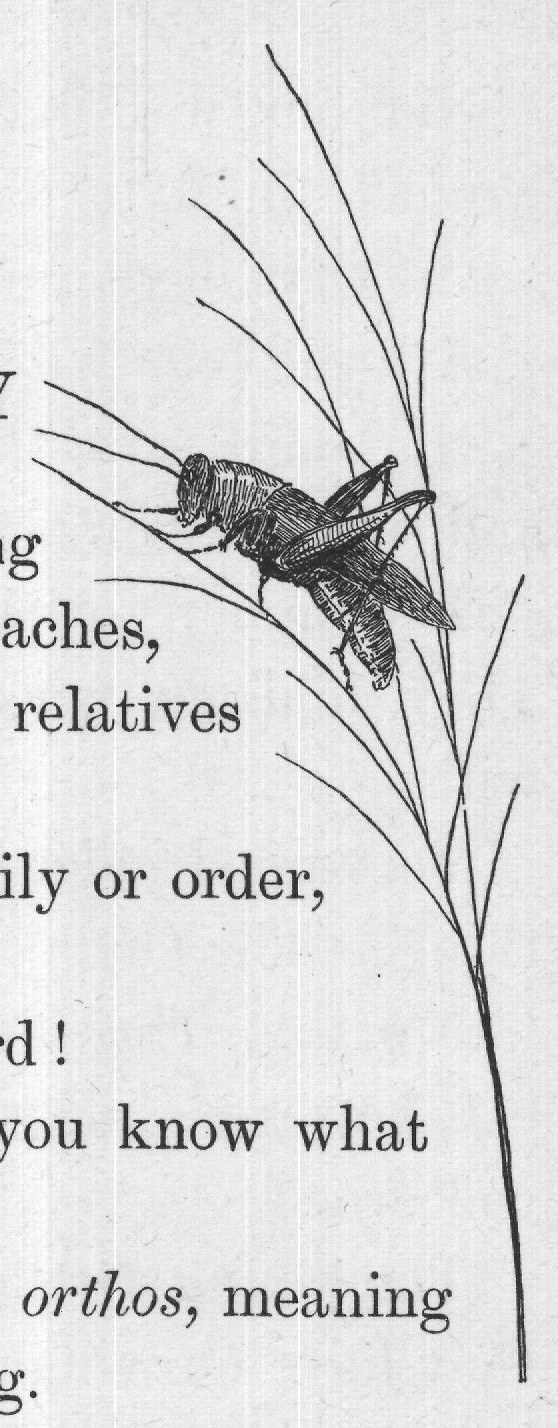
Or-thop-te-ra, is it not a hard word!
It will not seem so hard when you know what it means.
It comes from two Greek words orthos, meaning straight, and pteron, meaning a wing.
Straight-wing.
And do you know, it does not mean that the upper wings are straight, but that the under wings are folded down in long straight lines.
Now let us see if we can tell in what ways all of our Orthoptera are alike.
They all have ? "Four wings" - that is right, little Nell.
What, John? the walking sticks have no wings?
Not our walking sticks, but yet they belong to a winged family. You remember the tropical walking sticks that have queer leaf-like wings, do you not?
Are the four wings alike?
No, John says, the upper ones are narrow and stiff and serve as wing covers.
The inner ones are broader and more delicate.
They fold up when not in use and are used to fly with.
Very good indeed, John. Now I will tell you something. The Orthoptera all have mouth parts made to bite with. They do not bite anything but what they eat, however. They are quite harmless so far as we are concerned.
The young Orthoptera look like the old ones, only they have no wings. They hatch out of the egg with a head, a six-legged thorax, and an abdomen.
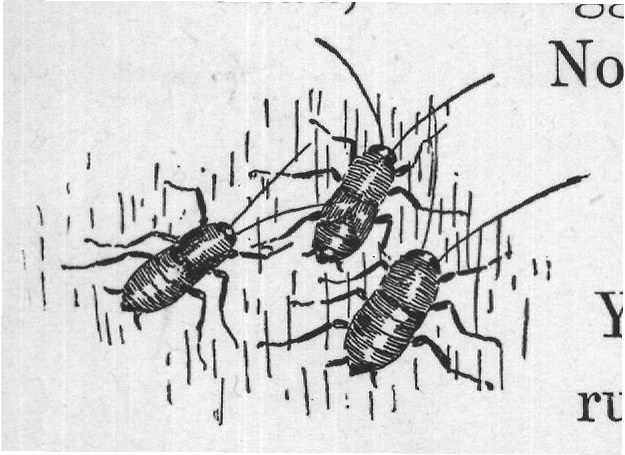
Now, come, let us look at all of our orthopterous friends again, cockroaches first. How do they get about, John?
Yes, indeed, they run, the rascals. They run fast too. They are flat and their six They are well built for runlegs are very much alike. ning and hiding in cracks.
Suppose we call them the Running Orthoptera.
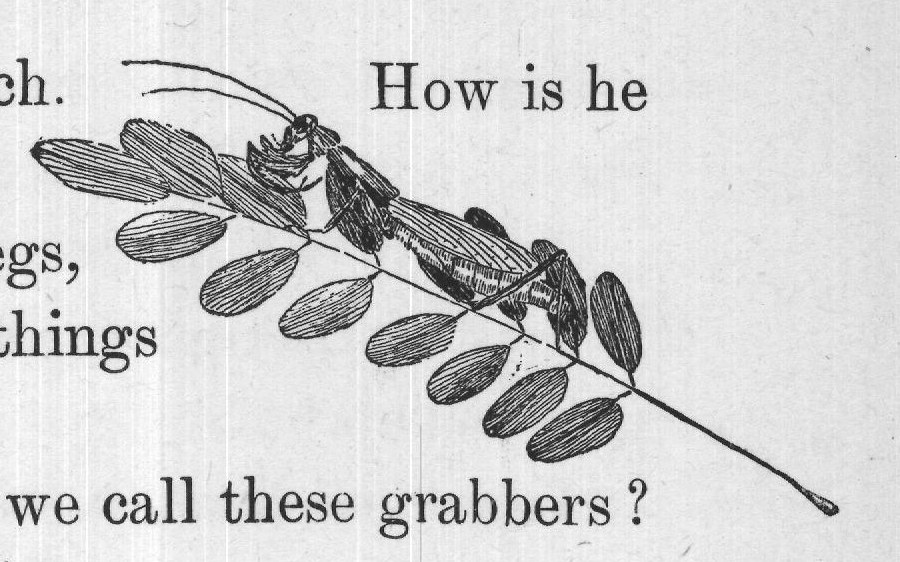
Now, look at our mantis.
He does not run very much. different from the others?
Ah, yes, he has big front legs, and little Nell says he grabs things with them.
How is he So he does. Now, what shall we call these grabbers?
The Grabbing Orthoptera, Ned says.
Suppose we say instead the Grasping Orthoptera, because grasping sounds a little better than grabbing. Do you not think so?
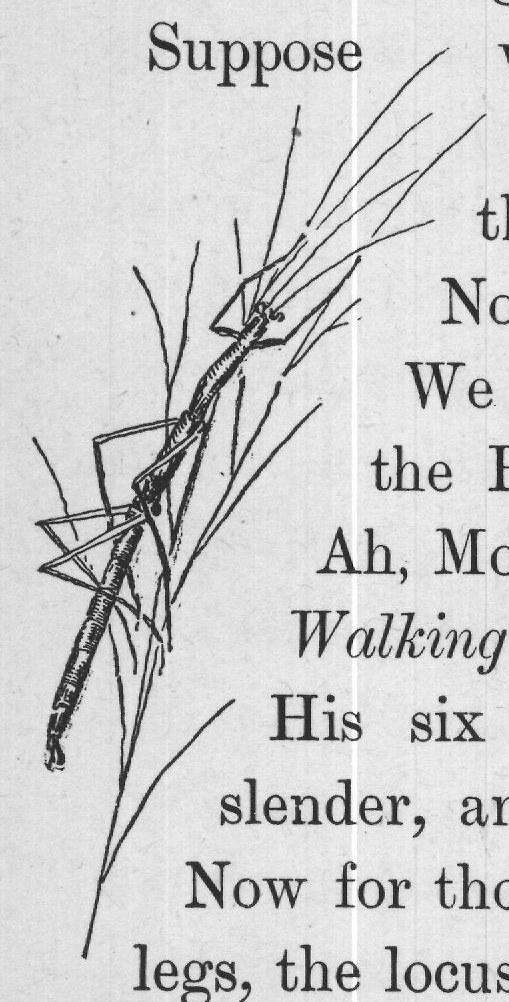
Now for Mr. Walking Stick.
We cannot very well call him a member of the Running Orthoptera, can we?
Ah, Mollie has it. We must call his kind the Walking Orthoptera.
His six legs are all long and slender, and he moves them slowly.
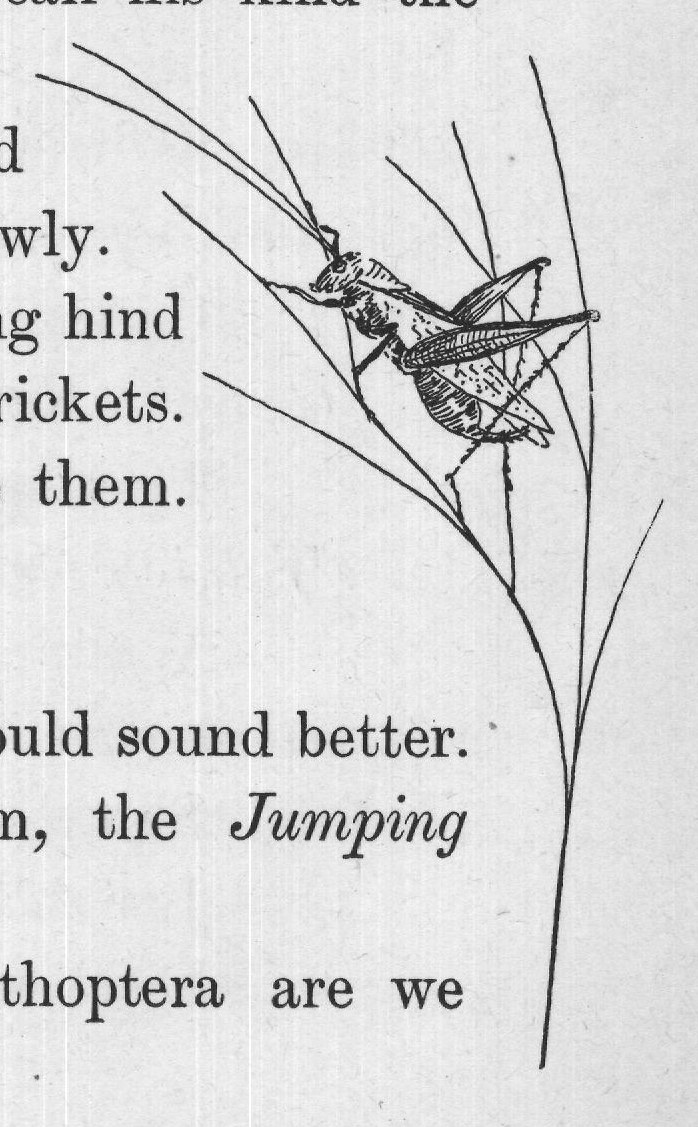
Now for those fellows with the long hind legs, the locusts and katydids and crickets.
Yes, all of you are ready to name them.
We call them - what?
May says, the Hopping Orthoptera.
John thinks Jumping Orthoptera would sound better.
And that is what we name them, the Jumping Orthoptera.
How many kinds of Jumping Orthoptera are we acquainted with, Ned? Now, think before you speak.
He says we know the shorthorned grasshoppers, or locusts, the longhorned, or meadow, grasshoppers, and the crickets.
Very well done, Ned.
May wants to know what has become of the katydids and the cricket-like grasshoppers - she thinks Ned has left them out.
Ned says they belong to the longhorned grasshoppers. Now you shall have a list of the Orthoptera that will help you to remember them.
If we can group together things that are like each other, it is easier to remember them.