Home › The Swarm › The Swarm: Bees
The Swarm: Bees
Bees, like other creatures, are subject to disease, a fact thus commented upon by Pliny: - "Bees are also by nature liable to certain diseases of their own. The sign that they are diseased is a kind of torpid, moping sadness; on such occasions, they are to be seen bringing out those that are sick before the hives, and placing them in the warm sun, while others, again, are providing them with food. Those that are dead they carry away from the hive, and attend the bodies, paying their last duties, as it were, in funeral procession. "If the king should happen to be carried off by the pestilence, the swarm remains plunged in grief and listless inactivity; it collects no more food, and ceases to issue forth from its abode; the only thing that it does is to gather around the body, and to emit a melancholy humming noise. Upon such occasions, the usual plan is to disperse the swarm and take away the body; for otherwise they would continue listlessly gazing upon it, and so prolong their grief. Indeed, if due care is not taken to come to their aid, they will die of hunger. It is from their cheerfulness, in fact, and their bright and sleek appearance that we usually form an estimate as to their health."
This fancy sketch of their maladies does not truly represent the bees of to-day, that suffer severely from certain diseases, but are not, so far as we know, consumed by grief over the death of their comrades, nor do they take care of them when sick.
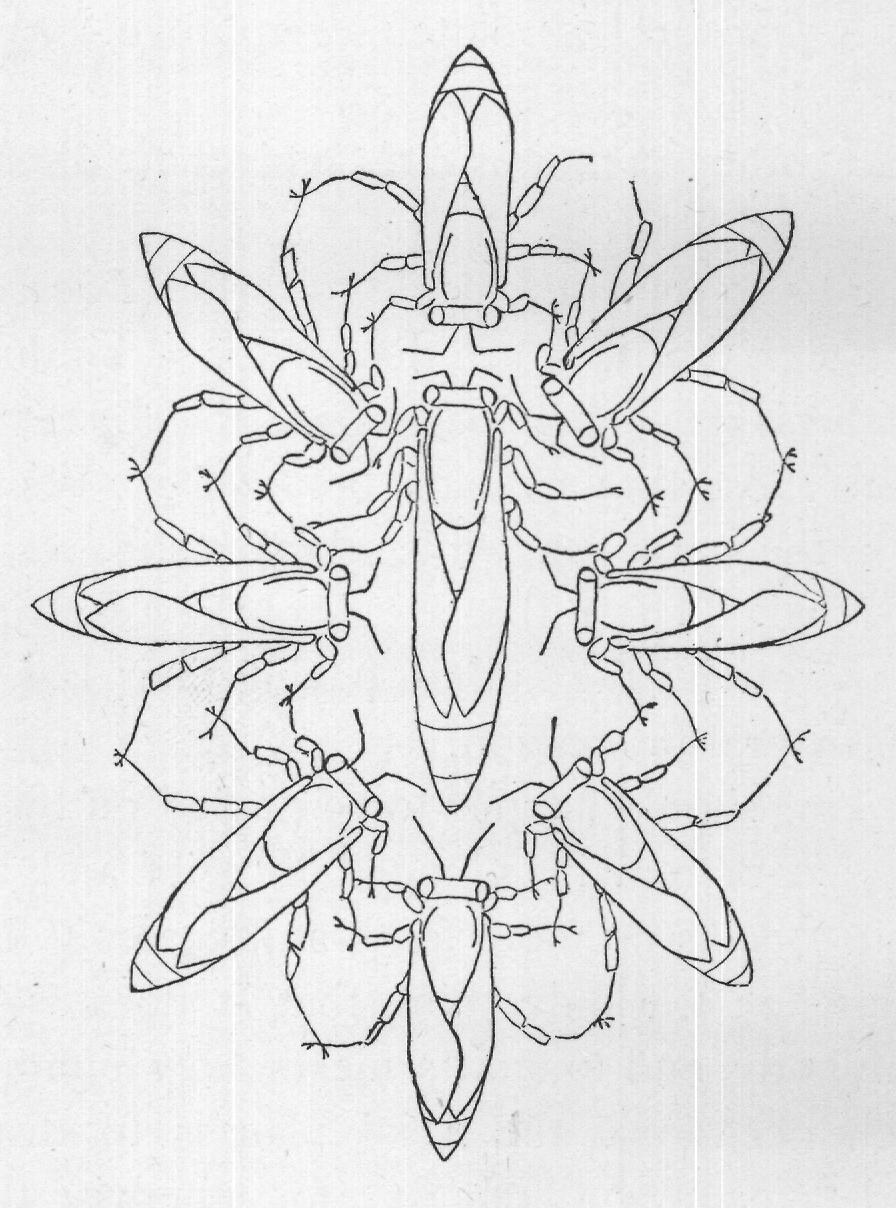
It is a well-known fact that bees, like most other insects, have parasites. In warm countries the "bee-louse" often proves troublesome, sometimes even covering the queenbee until only her legs are visible. HONEY Every pleasant summer day the bees are up and away at daybreak in search of nectar. "Humming-moths and humming-birds seldom set foot upon a flower, but poise on the wing in front of it, and reach forward as if they were sucking through straws. But bees, though as dainty as they, hug their favorite flowers with profound cordiality, and push their blunt, polleny faces against them, like babies on their mother's bosom. And fondly, too, with eternal love, does Mother Nature clasp her small bee-babies, and suckle them, multitudes at once, on her warm Shasta breast." Thus Muir. And he might have said it of every flowery knoll this fair land over. In May the apple blossoms are rifled and their sweets gathered into the hives, to be fed mostly to the young. In June the red raspberries in the north tempt the bees from all other blooms and afford such abundant nectar that they begin to fill the upper stories with pure honey by which we are to benefit.
But the honey of the first flowers belongs to the bees, and that from the maple, the willow, the alder, and the dandelion we are not as a rule allowed to taste. Our turn comes when the raspberries and white clover begin to bloom.
Then is laid by great store of surplus sweets. As fast as a flower is drained of its nectar by the eager bees, its glands pour out more, so as long as a plant remains in bloom it yields as a rule tribute to the honey-seekers. I2 This elaboration of nectar takes place in some flowers with amazing rapidity, so that if the blossoms are protected from the approach of insects, in a few hours they will look as if they had been dipped in honey.