Home › The Regal Vestments › The Regal Vestments: James II
The Regal Vestments: James II
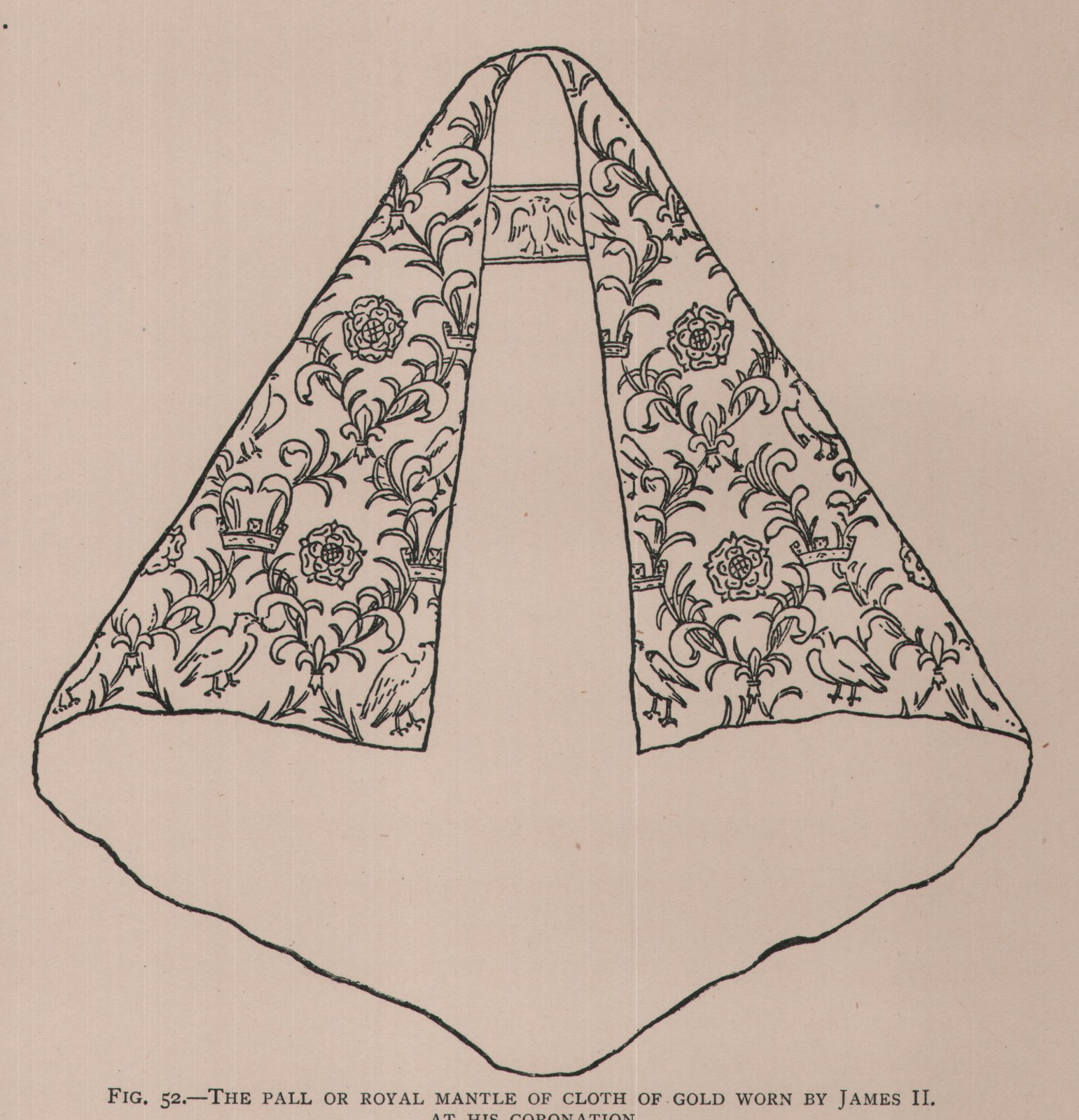
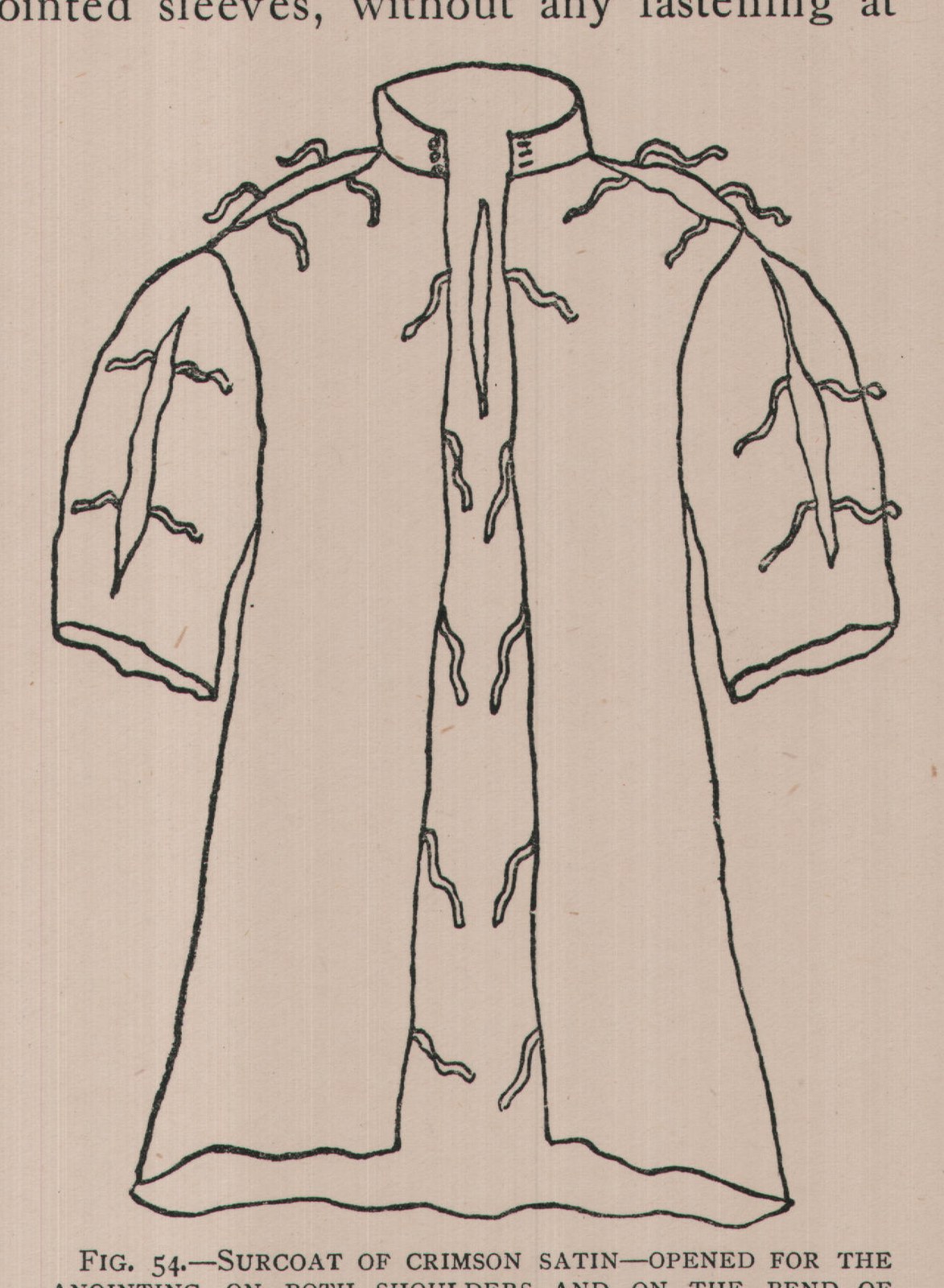
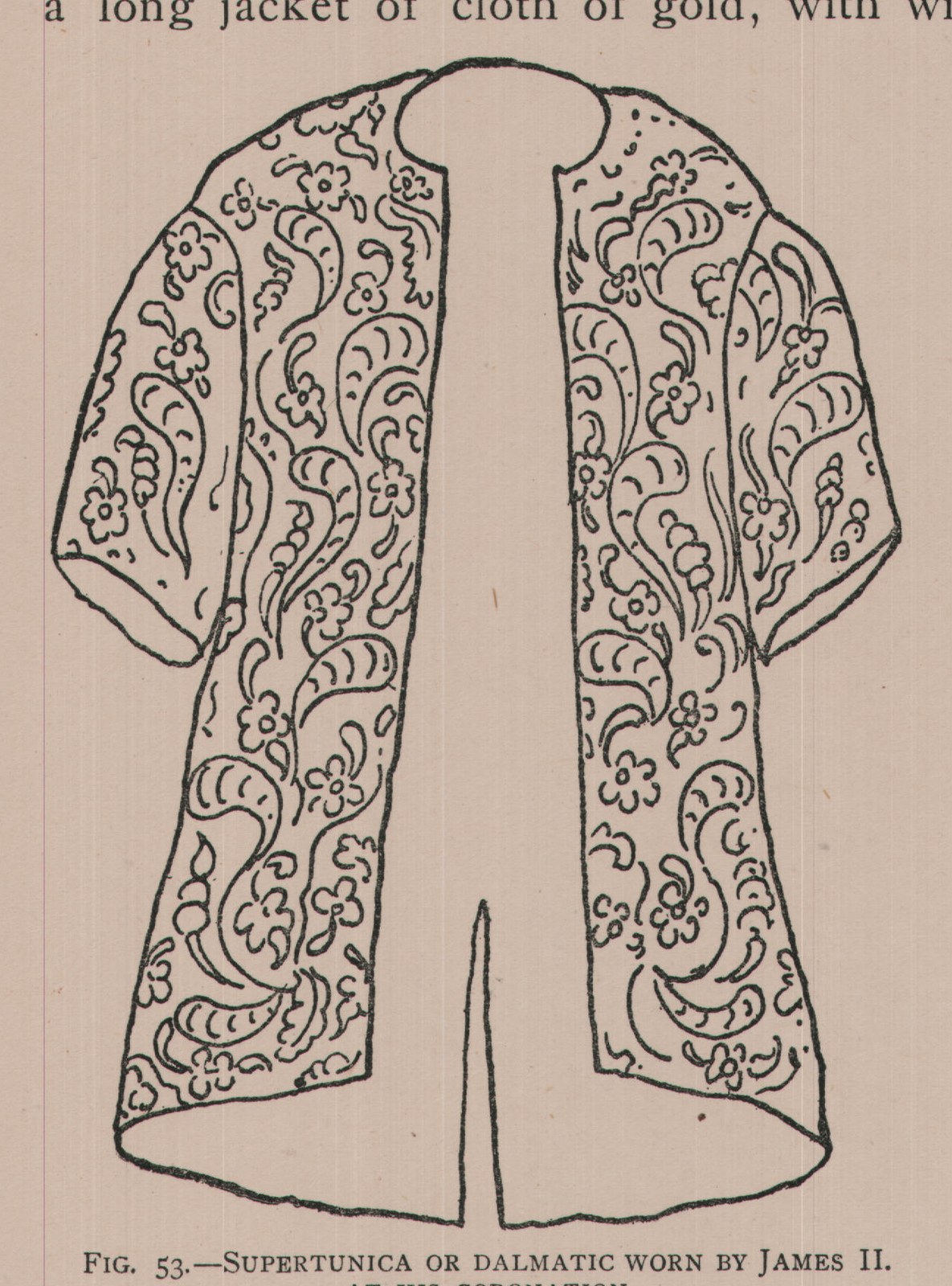
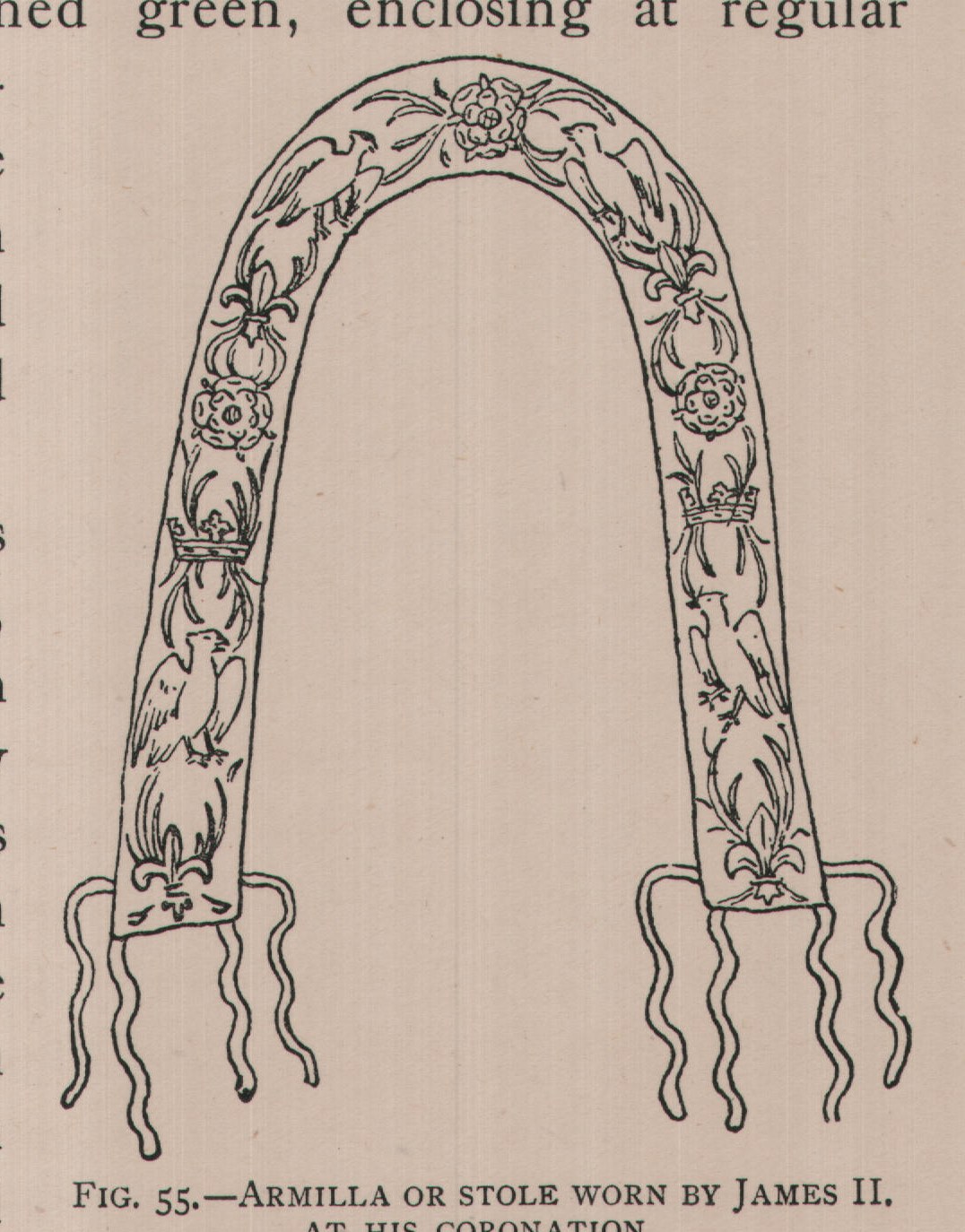
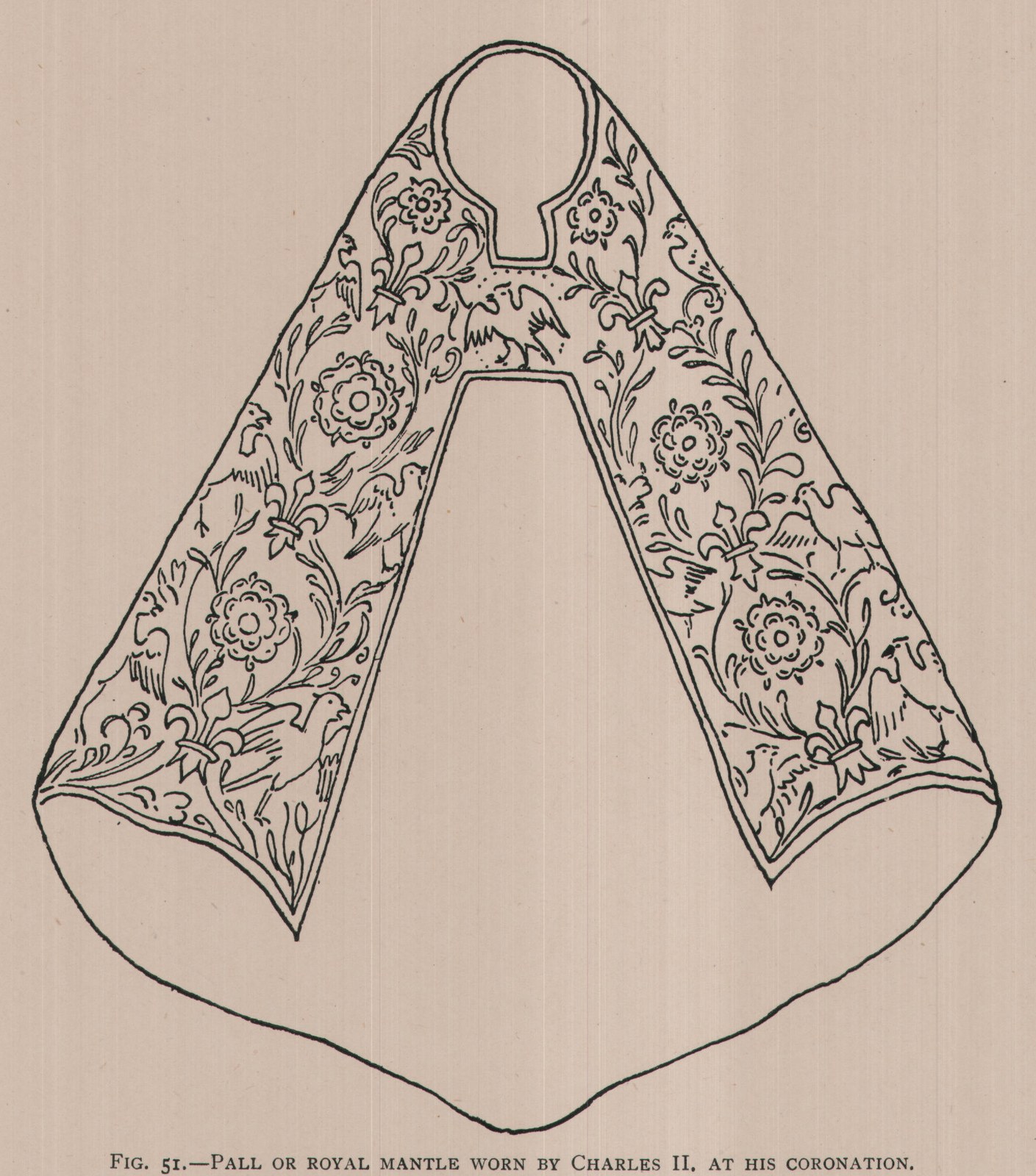
The vestments used by James II. again show the use of the same general design in the three chief items as before. These are fully described and figured in Francis Sandford's History of the Coronation of James II., and are figured on the first plate. The imperial mantle has floral sprays arranged in ovals as already described, and also eagles, coronets, fleurs-de-lys and roses (Fig. 52). The supertunica of cloth of gold has still only floral sprays upon it (Fig. 53). There is also a curious surcoat of crimson satin with openings left for the inunction (Fig. 54). The armilla bears a rose as a centre ornament, and is further adorned with eagles, roses, coronets and fleurs-de-lys (Fig. 55). The vestments that were used at the coronation of Queen Victoria are now in charge of an officer called the Keeper of the Robes, and are kept at St. James's Palace. They consist, like the vestments we have just mentioned, of the Colobium Sindonis, Dalmatic, Stole, Imperial Mantle, and to a considerable extent they preserve the ancient forms and designs of ornamentation. AT HIS CORONATION.
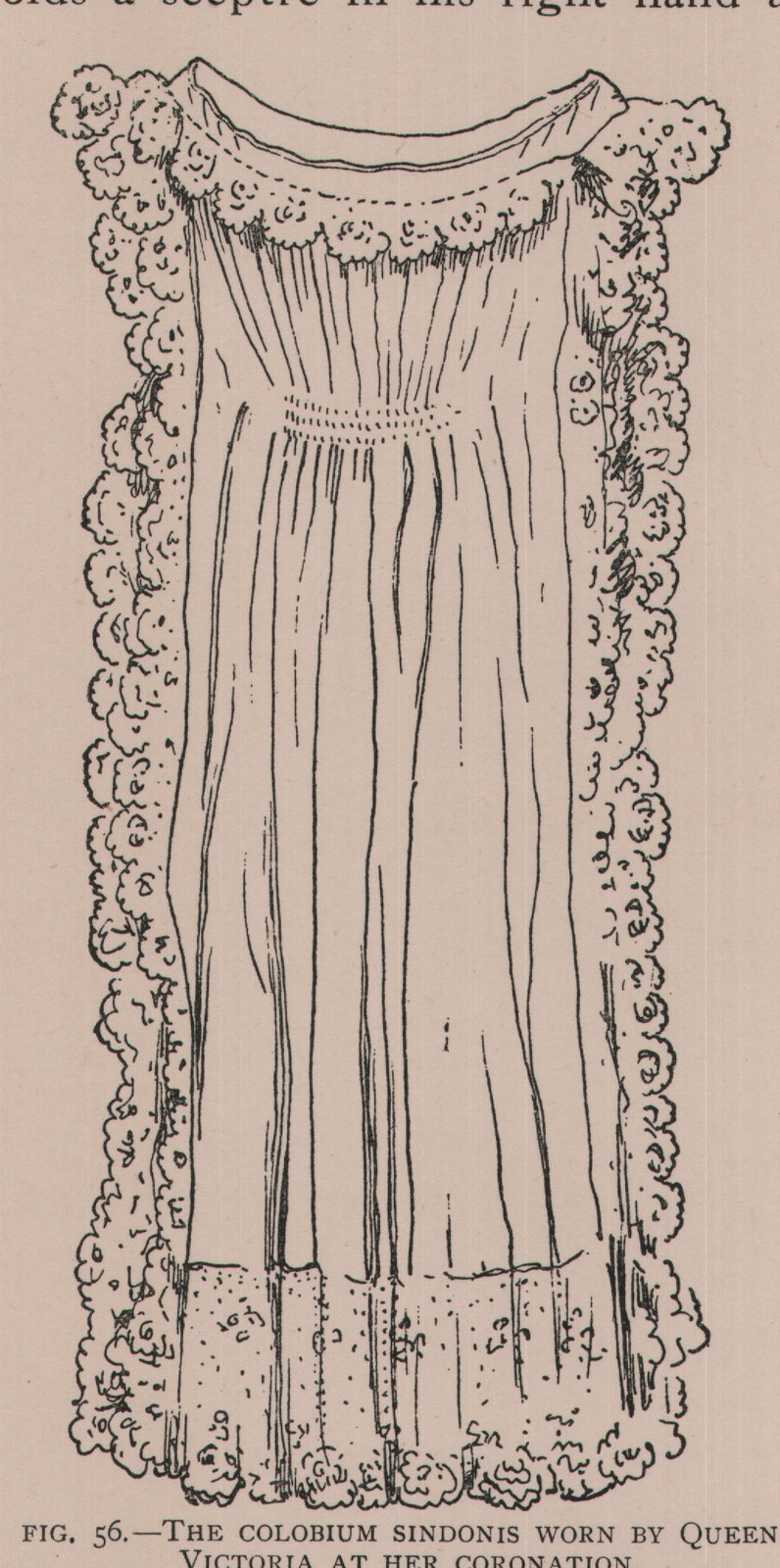
The colobium sindonis, the first vestment put upon the sovereign after the anointing, represents the alb of a priest, or the rochet of a bishop. It is a sleeveless garment of soft fine linen, edged with lace, and with a deep lace flounce of nine inches in depth (Fig. 56). It is open at the side, and cut low at the neck, also edged all round with lace.
It is gathered in at the waist and opens on the left shoulder, fastening with three small buttons. Upon the right shoulder are three sham buttons to match. At the coronation a thick gold cord with heavy bullion tassels is worn at the waist over the "colobium," corresponding to the girdle of the alb.
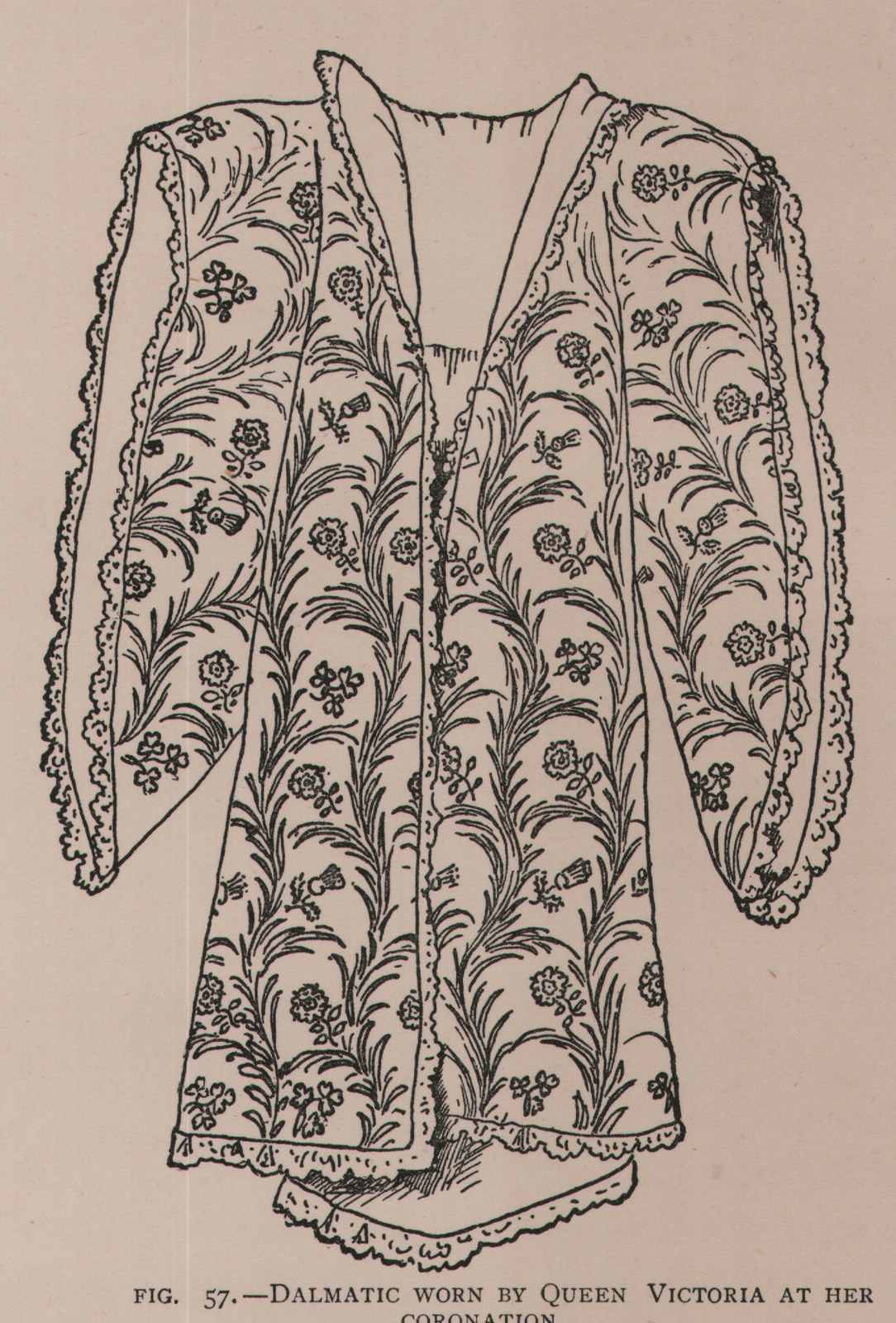
THE REGAL VESTMENTS The dalmatic, or supertunica, is put on after the colobium sindonis. It is a long jacket of cloth of gold, with wide pointed sleeves, without any fastening at AT HIS CORONATION.
ANOINTING ON BOTH SHOULDERS AND ON THE BEND OF THE ARMS AND AT THE BACK WITH CRIMSON TAFFETA TIES. WORN BY JAMES II. AT HIS CORONATION. all. The edges are all trimmed with gold lace. The design, woven into the cloth of gold, is a wavy pattern of palm leaves, outlined green, enclosing at regular intervals pink roses with green leaves, green shamrocks, and purple thistles. All these designs are in very pale colours, and the effect of them when the cloth of gold is moved is very delicate and beautiful. It is lined throughout with rose-coloured silk (Fig. 57).
The stole now, in religious ceremonies, succeeds the alb immediately; but, in the coronation service, it succeeds the dalmatic, as it did in the eleventh and twelfth centuries, and it is so worn now by the Greek and Russian deacons. So here our kings preserve an ancient custom which the Western Church has lost. The stole was used at one time crossed over the breast, and one was found on the body of Edward I., worn in this manner, when his tomb at Westminster was opened in 1774; and F AT HIS CORONATION. it certainly was worn in this fashion abroad. This is the manner in which the stole is worn by a priest, but not by a bishop, when vested for Mass. A fine example of this manner of wearing the royal stole can be seen on the beautiful bulla of the Emperor Frederick III., made in the fifteenth century. A specimen of it is now exhibited in one of the show-cases in the British Museum. The Emperor holds a sceptre in his right hand and an orb in his left. VICTORIA AT HER CORONATION.
CORONATION, Queen Victoria's stole is a band of cloth of gold, three inches wide and five feet two inches long, with bullion fringe at each end. It is heavily embroidered with silver thread and a little colour. The centre ornament is a pink rose, the remaining ornaments are silver imperial eagles, silver and green shamrocks, silver, green, and purple thistles, and pink roses. Each of these emblems is divided from the next one to it by a silver coronet, and at each end is a square panel with a a cross of St. blue and white torse above and below, worked with red George on a silver ground. It is lined with rose silk, and was worn by Queen Victoria hanging from the neck and depending at each side. It will be seen that the ornaments upon this stole resemble those of both Charles II. and James II., but that they are more ornate (Fig. 58).
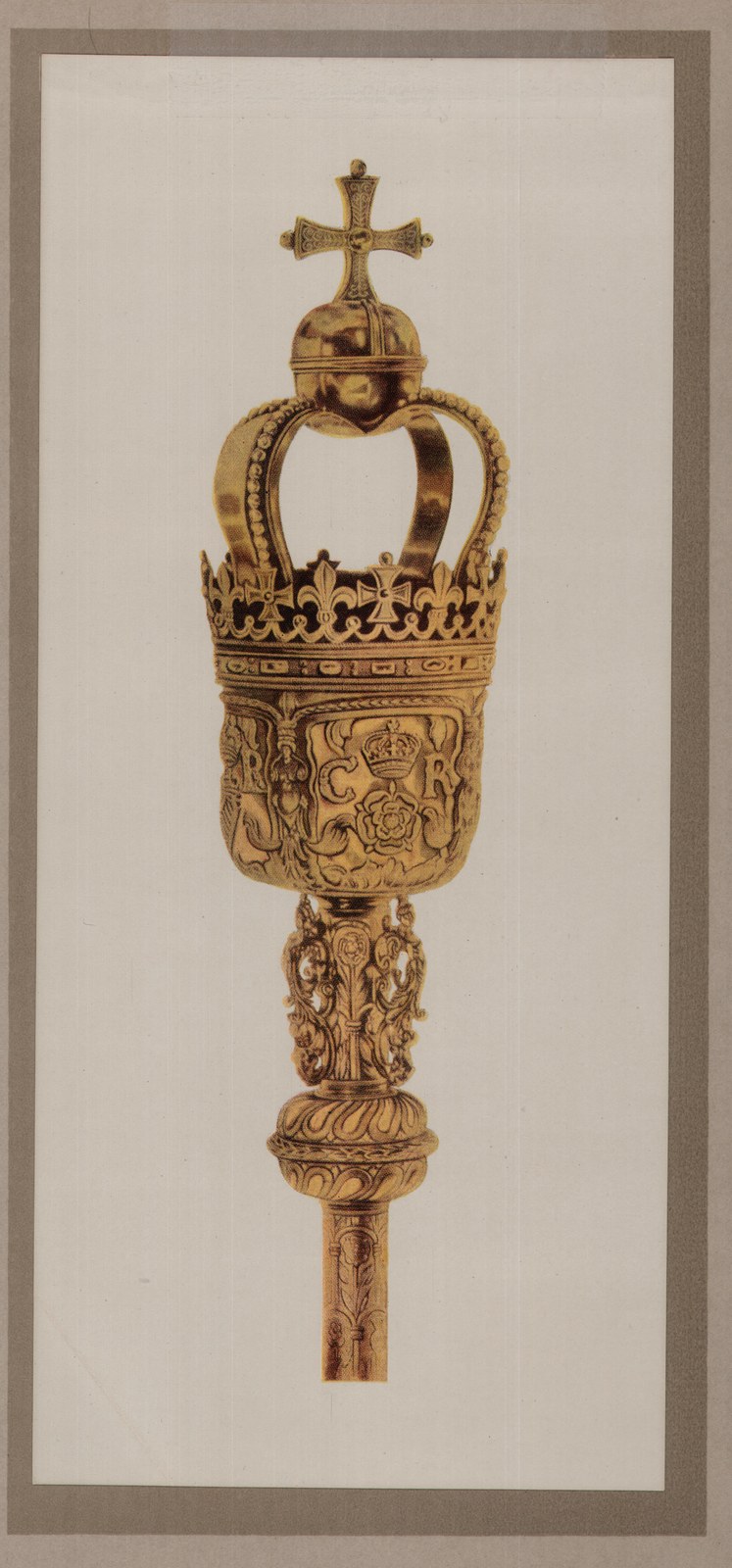
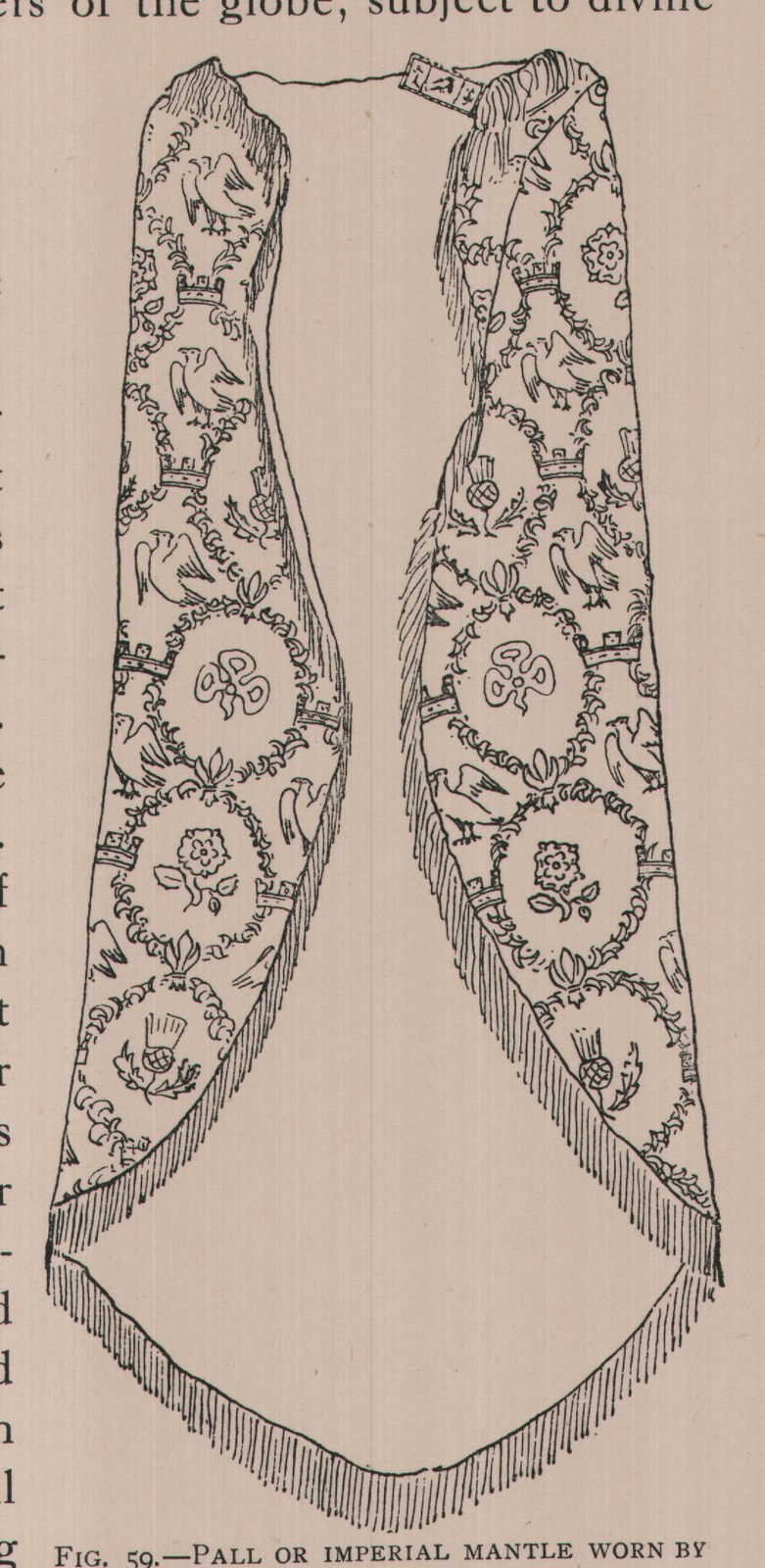
Plate XVIII SERJEANT-AT-ARMS' MACE R + THE REGAL VESTMENTS The The Imperial mantle is the last garment to be put upon the sovereign. mediæval rubric describes this as four-square, embroidered with golden eagles. The four corners are supposed to represent the four quarters of the globe, subject to divine power, and it is analogous to the cope of a bishop.
The magnificent mantle worn by Queen Victoria is sixty-five inches long, and measures across the shoulders twenty-eight inches. It is edged all round with golden bullion fringe two and a half inches deep, and is lined with rose-coloured silk.
To the upper edge is attached a gold morse or clasp, with silver edge faceted to represent diamonds (Fig. 59). In the centre of this morse is the figure of an eagle in repoussé work, and at 1 OR STOLE WORN a each of the sides a spray of rose, shamrock, and thistle similarly worked. There is a hook at the back of the neck to prevent the robe slipping.