Home › The Nymphs › The Fritillaries
The Fritillaries
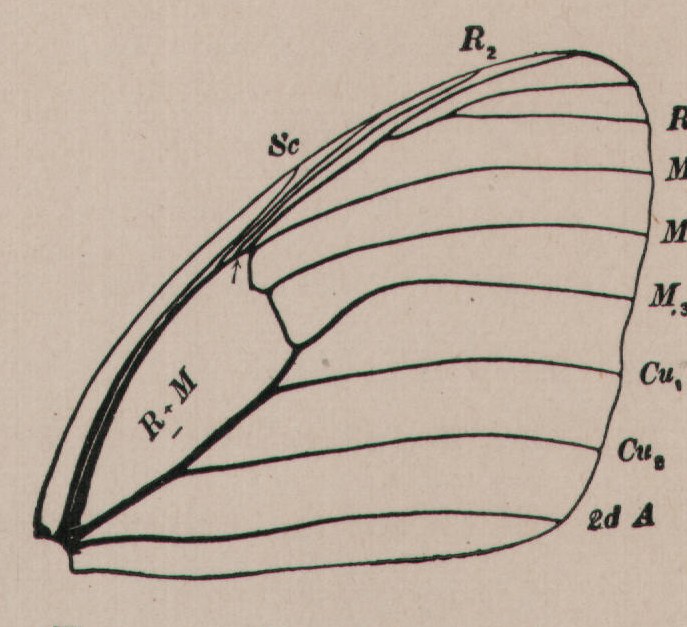
The fritillaries are butterflies varying from a little below to somewhat above medium size. The club of the antennæ is short and broad; and, as in the crescent-spots, it is marked beneath with a single elevated line or with none. The palpi are large and bushy, the last segment extremely short. The color of the wings is fulvous bordered and checkered with black; but not so heavily bordered as in the crescent spots. The lower surface of the hind wings is often marked with curving rows of silvery spots. This is a large group containing many species, which are extremely difficult to separate. R₂ R 5 M M R2 Sc R-M 2 M3 3 Cu, Cu2 2 Ed A R-M Sc R M M M 3 2 Cu Cu 2d A FIG. 31.-Fore wing of A graulis FIG. 32.-Fore wing of Argynnis vanillæ. cybele.
More than fifty species occur in America north of Mexico. The larvæ feed upon the leaves of violets.
The more common species, which are described below, can be separated by the following table:
A. Vein R. of the fore wings arising beyond the apex of cell R+M (Fig. 31). 2 B. Fore wings with the apex produced, making the outer margin concave (Fig. 33).
C. Lower side of wings marked with silvery spots. (A. vanilla), p. 107.